
Epistemic Framing: How the Presentation of Risk Alters Executive Judgment
gc-bs.org
Aug. 15, 2026, 7:27 a.m.
This article examines how the presentation of information fundamentally shapes executive decision-making, challenging the classical economic model of Homo economicus—the perfectly rational decision-maker assumed by Von Neumann and Morgenstern's expected utility theory. Herbert Simon's concept of bounded rationality demonstrated that humans possess finite cognitive resources and incomplete information, forcing reliance on mental shortcuts or heuristics that predictably deviate from classical rationality. The article emphasizes the framing effect, a cognitive bias wherein identical decision problems presented differently—particularly whether outcomes are framed as gains or losses—can reverse strategic preferences despite unchanged expected values. In corporate governance contexts, where executives face Knightian uncertainty with unknowable probabilities, even highly skilled business leaders remain susceptible to epistemic framing: the cognitive, linguistic, and structural scaffolding through which risk and uncertainty are communicated. This framing determines what organizational communities consider actionable or valid, making the presentation of information as consequential as its substance in shaping high-stakes strategic choices.
Share on

Effect of Money Psychology on Financial Decision-Making Behavior among Employees in Public and Private sector Institutions in Rwanda – Journal of Research Innovation and Implications in Education
www.jriiejournal.com
Aug. 15, 2026, 7:27 a.m.
This study examined how psychological factors influence financial decision-making among Rwandan public and private sector employees. Researchers from Kigali Independent University, Kibogora Polytechnic, and Catholic University of Eastern Africa surveyed 650 employees using a structured questionnaire and analyzed responses through SPSS version 28, applying Pearson correlation and multiple regression analysis. The investigation assessed the impact of money attitudes, financial self-control, financial anxiety, and financial confidence on financial behavior, while evaluating financial literacy as a moderating variable. Results demonstrated that all four psychological dimensions significantly predicted financial decision-making, collectively accounting for 55.4% of behavioral variance. Financial confidence emerged as the strongest predictor, followed by self-control, anxiety, and money attitudes. Financial literacy moderated all relationships, though with modest negative effects. The findings suggest that despite stable incomes and improved financial service access, psychological factors substantially influence poor financial outcomes. The research recommends targeted interventions strengthening financial confidence and self-control while promoting healthy money attitudes and reducing financial anxiety through enhanced financial literacy programs.
Share on

Data-driven personalization of just-in-time adaptive mental health intervention via two-stage reinforcement learning approach - npj Digital Medicine
www.nature.com
Aug. 15, 2026, 7:26 a.m.
Researchers developed a data-driven framework using offline reinforcement learning to personalize digital mental health interventions based on individual user characteristics and psychological states. The two-stage RL approach was trained on data from a six-week micro-randomized trial involving 190 participants, optimizing both the timing and type of intervention delivery to maximize improvements in depression, anxiety, and stress scores. Using fitted Q evaluation (FQE) and six off-policy estimators, the learned policy outperformed both standard behavioral policies and rule-based alternatives. The framework revealed clinically meaningful patterns, including recommending interventions when users retained psychological resources and assigning high value to positive-psychology content even during lower-distress periods—findings aligned with the Broaden-and-Build theory of emotional resilience. Rather than uniform content delivery, this approach enables personalized, explainable intervention rules. The research, funded by South Korea's National Research Foundation and Health Industry Development Institute, provides a hypothesis-generating foundation for prospective validation of adaptive mental health interventions tailored to individual needs.
Share on

The Definition of Nudge and Libertarian Paternalism: Does the Hand Fit the Glove? | European Journal of Risk Regulation
www.cambridge.org
Aug. 10, 2026, 8:09 a.m.
In recent years the concepts of ‘nudge’ and ‘libertarian paternalism’ have become popular theoretical as well as practical concepts inside as well as outside academia. But in spite of the widespread interest, confusion reigns as to what exactly is to be regarded as a nudge and how the underlying approach to behaviour change relates to libertarian paternalism. This article sets out to improve the clarity and value of the definition of nudge by reconciling it with its theoretical foundations in behavioural economics. In doing so it not only explicates the relationship between nudges and libertarian paternalism, but also clarifies how nudges relate to incentives and information, and may even be consistent with the removal of certain types of choices. In the end we are left with a revised definition of the concept of nudge that allows for consistently categorising behaviour change interventions as such and that places them relative to libertarian paternalism.
Share on

Customer Centricity Strategy: Beyond the Slogan
www.renascence.io
Aug. 8, 2026, 7:23 a.m.
Most organisations claim to be customer-centric, yet few genuinely operate as such. This guide from Renascence distinguishes between superficial customer-centricity—represented by mission statements and NPS dashboards—and authentic organisational practice rooted in decision-making culture. True customer centricity functions as an operating model rather than a value statement, structuring decisions, processes, metrics, and culture around customer needs rather than internal convenience. The article clarifies that customer centricity differs fundamentally from customer service functions or satisfaction metrics; organisations can maintain friendly staff while operating broken processes that drive customer attrition. Effective customer-centricity requires three simultaneous components, with most organisations implementing only one or two. The commercial case for this approach rests on established marketing economics: retaining existing customers costs substantially less than acquiring new ones, a principle documented through Frederick Reichheld's loyalty research at Bain & Company and contemporary retention studies. This framework demonstrates that closing the gap between organisational rhetoric and operational reality determines whether customer centricity succeeds or fails under commercial pressure.
Share on

[PDF] Climate change adaptation and farm-level investment
www.frontiersin.org
Aug. 8, 2026, 7:23 a.m.
This peer-reviewed research article published in Frontiers examines the critical relationship between climate change adaptation and investment decisions at the farm level. The study investigates how agricultural producers respond to climate threats through capital investments in adaptive infrastructure and practices. Using empirical analysis of farm-level data, the research identifies key factors influencing farmer adoption of climate adaptation strategies, including economic viability, access to credit, technological availability, and risk perception. The findings reveal significant variations in adaptation investment across different farm types and geographic regions, with smaller operations facing particular financial constraints. The research demonstrates that successful adaptation requires coordinated support including financial incentives, technical assistance, and policy frameworks that facilitate long-term investment planning. This work matters substantially for agricultural policy development and climate resilience planning, as farm-level adaptation investments are essential for maintaining productivity and food security amid increasing climate variability and extreme weather events. The insights contribute to understanding how to effectively mobilize agricultural sector engagement in climate adaptation efforts.
Share on

Journal Club | belss
belss.unibocconi.eu
Aug. 8, 2026, 7:23 a.m.
The BELSS Journal Club is a weekly forum convening researchers to discuss recent behavioral and social science papers spanning economics, management, marketing, psychology, political science, and public policy. Open to all interested participants, the club meets every Thursday from 5 to 6 pm in Room 4-E4-SR03/4-E4-SR01, combining formal paper discussions with informal feedback sessions on members' work-in-progress. Recent discussions have addressed cutting-edge applications of artificial intelligence in social science. A July 2026 Nature publication by Ashokkumar and colleagues examined whether large language models, specifically GPT-4, can predict experimental outcomes. The researchers tested this capability using 70 preregistered survey experiments comprising 469 treatment effects and over 119,000 participants. GPT-4 predictions showed strong correlations with actual treatment effects, matching the accuracy of pooled human forecasts, even for studies published after the model's training cutoff. While predictions systematically overestimated effect sizes, results suggest LLMs may enhance research forecasting and potentially advance scientific practice by identifying patterns across large experimental archives.
Share on

Examining User Behavior and Cognitive Biases in Personal Password Security
arxiv.org
Aug. 8, 2026, 7:23 a.m.
This arXiv study examines why users persist in insecure password practices despite heightened cybersecurity awareness. Researchers conducted a survey analyzing password creation, storage, and management habits while investigating behavioral and cognitive factors influencing these decisions. Drawing on behavioral economics concepts including hyperbolic discounting, status quo bias, and present bias, the research reveals that users consistently prioritize immediate convenience over long-term security, favoring memorable passwords over strong ones. Key psychological biases drive security procrastination and resistance to adopting password managers and multi-factor authentication. The findings are particularly timely given the FBI's Internet Crime Complaint Center reported 1,000,597 complaints in 2025 versus 859,532 in 2024, with a 26 percent increase in losses and over 3.6 million dollars in ransomware-related losses. The FBI recommends implementing NIST password standards, eliminating default credentials, and deploying multi-factor authentication alongside non-password-based security controls. This research bridges the critical gap between security awareness and user action, providing practical insights for designing human-centered authentication policies that align with real-world decision-making tendencies.
Share on

Handbook of Behavioral Economics and Climate Change
www.e-elgar.com
Aug. 1, 2026, 1:49 p.m.
Situating a comprehensive microbehavioral analysis of the economics of climate change within a discussion of the most pressing global climate change issues and policy negotiations, the Handbook of Behavioral Economics and Climate Change is a timely collection of new research on the behaviors of economic agents that are essential to an exposition of climate change economics and policy making.
Share on

Lessons in "Nudging" From the Developing World
behavioralscientist.org
Aug. 1, 2026, 1:35 p.m.
In 2013, the influence of Nudge and the success of the groups like the Behavioural Insights Team (BIT) demonstrated that behavioral science was a powerful tool in the developed world. It led us at the World Bank to wonder, what impact could behavioral science have when applied across dozens of developing countries with different governments, capacities, and needs?
Share on

Does 'nudge theory' work after all?
www.bbc.co.uk
Aug. 1, 2026, 1:30 p.m.
Nudges aim to influence people to make better decisions. For example, authorities may set a “better” choice, such as donating your organs, as a default. Or they could make a healthy food option more attractive through labelling. But new research reviewing this paper – which had looked at 212 published papers involving more than two million participants – and others now warns that nudges may not have any effect on behaviour at all. To understand why, we need to go into some details about statistics, and how experimental findings are analysed and interpreted. Researchers start off with a hypothesis that there is no effect (null hypothesis). They then ask, what is the probability of getting an actual effect by chance?
Share on

What is nudge theory and why is it important?
www.ubs.com
Aug. 1, 2026, 7:23 a.m.
Nudge theory is a behavioral economics concept that shapes human decision-making by redesigning the "choice architecture"—the context in which choices occur—without restricting freedom. Popularized by economist Richard H. Thaler and legal scholar Cass Sunstein in their 2008 book *Nudge: Improving Decisions About Health, Wealth, and Happiness*, the theory recognizes that people operate under bounded rationality, relying on environmental cues and cognitive biases rather than perfect logic. Practical examples include positioning salad bars first in cafeterias to encourage healthy eating, using spending alerts in mobile banking apps, and automatically enrolling employees in retirement savings plans to boost national savings rates. The concept has proven particularly effective in increasing organ donation rates through thoughtfully designed systems. Rooted in game theory—a mathematical framework for analyzing strategic interactions originating from John von Neumann and Oskar Morgenstern in 1944—nudge theory has become instrumental across public policy and corporate strategy. Thaler's pioneering work in behavioral economics, including nudging applications, earned him the 2017 Nobel Memorial Prize in Economic Sciences. Governments worldwide have established dedicated nudge units to leverage these insights for societal benefit.
Share on

Cognitive Biases in Strategic Decision-Making Processes
crimsonpublishers.com
Aug. 1, 2026, 7:23 a.m.
This research article examines how cognitive biases systematically distort strategic decision-making processes within organizations. The study investigates the psychological mechanisms underlying common biases such as confirmation bias, anchoring, and overconfidence that influence executive and managerial choices. The research demonstrates that decision-makers frequently rely on mental shortcuts and heuristics that lead to suboptimal outcomes, particularly in complex, high-stakes environments. The findings reveal that these biases operate across multiple organizational levels and decision contexts, from resource allocation to competitive strategy formulation. The article emphasizes that cognitive biases persist despite decision-makers' awareness and experience, suggesting they are inherent to human cognition rather than correctable through simple awareness interventions. The significance of this work lies in its implications for organizational performance and risk management, highlighting the necessity for structural interventions, decision-support systems, and diverse teams to mitigate bias effects. Understanding these cognitive limitations is critical for organizations seeking to enhance strategic decision quality and competitive positioning in uncertain business environments.
Share on

Why gamification kills the products it's supposed to save
www.mindtheproduct.com
Aug. 1, 2026, 7:22 a.m.
A product manager with extensive experience in consumer app engagement reveals how poorly executed gamification mechanics paradoxically drive away existing users despite appearing successful on engagement dashboards. The core issue stems from optimizing for short-term engagement metrics rather than user experience and trust. The author illustrates this through personal experience with two gamification features: a challenge mechanic enabling social shared activities, and a virtual pet system designed to create emotional attachment and daily habits. While metrics showed strong interaction, Day 7 and Day 30 retention rates declined, indicating that features boosting short-term engagement were burning out loyal users. The article identifies three critical design mistakes, with the first concerning feature discoverability—teams invest months building gamification mechanics while neglecting placement strategy. The author emphasizes that gamification fundamentally operates as a trust system where every mechanic either builds or erodes user confidence that the product serves their interests. This distinction between retention strategy and trust-building framework is essential for product teams seeking to implement sustainable engagement features that enhance rather than undermine long-term user retention.
Share on

Behavioral economics and the intersection of healthcare and financial decision making across the lifespan
nimss.org
Aug. 1, 2026, 7:22 a.m.
Rising obesity, cancer prevalence, and mortality rates have intensified debates about healthcare financing, with reform proposals buried in thousands of pages of complex legal documentation that leave consumers vulnerable to uninformed decisions. Healthcare consumers struggle to navigate intricate insurance systems and maximize their benefits due to limited understanding of financial terminology and the substantial effort required to learn available options. The challenge is compounded by psychological factors influencing financial decisions and financial pressures stemming from events like the 2008 global financial crisis. While consumers increasingly face complex health management and related financial decisions, research shows that simply providing information proves insufficient to drive optimal consumer choice. Although studies have examined consumer preferences regarding health insurance plans and health literacy levels, minimal research has addressed how consumers actually make healthcare financing decisions. This gap represents a critical opportunity to apply behavioral economics principles to enhance consumer decision-making and improve health insurance benefit utilization, making this focus essential for maximizing consumer utility and financial outcomes in healthcare.
Share on

Predicting Biased Human Decision-Making with Large Language Models in Conversational Settings
arxiv.org
July 25, 2026, 2:59 p.m.
We examine whether large language models (LLMs) can predict biased decision-making in conversational settings, and whether their predictions capture not only human cognitive biases but also how those effects change under cognitive load. In a pre-registered study (N = 1,648), participants completed six classic decision-making tasks via a chatbot with dialogues of varying complexity. Participants exhibited two well-documented cognitive biases: the Framing Effect and the Status Quo Bias. Increased dialogue complexity resulted in participants reporting higher mental demand. This increase in cognitive load selectively, but significantly, increased the effect of the biases, demonstrating the load-bias interaction. We then evaluated whether LLMs (GPT-4, GPT-5, and open-source models) could predict individual decisions given demographic information and prior dialogue. While results were mixed across choice problems, LLM predictions that incorporated dialogue context were significantly more accurate in several key scenarios. Importantly, their predictions reproduced the same bias patterns and load-bias interactions observed in humans. Across all models tested, the GPT-4 family consistently aligned with human behavior, outperforming GPT-5 and open-source models in both predictive accuracy and fidelity to human-like bias patterns. These findings advance our understanding of LLMs as tools for simulating human decision-making and inform the design of conversational agents that adapt to user biases.
Share on

How behavioral constraints and program delivery shape economic outcomes in poverty
econhangyu.github.io
July 25, 2026, 7:21 a.m.
Hang Yu's research examines how behavioral constraints and program delivery mechanisms shape economic outcomes in poverty settings across Sub-Saharan Africa, employing randomized field experiments and original household panel data. An evaluation of Ethiopia's Productive Safety Net Program using doubly robust difference-in-differences methodology found improvements in dietary diversity and asset accumulation, yet persistent seasonal food shortages stemmed from transfer disbursement delays during civil conflict and administrative restructuring. This highlights that program effectiveness depends critically on implementation capacity and delivery timing beyond design alone. Additional research investigates how financial sector development historically supported or constrained industrialization in Ethiopia, drawing comparative lessons from East Asian experiences to assess whether state-led financial deepening strategies can be adapted to capital-scarce Sub-Saharan African economies. Yu's work also addresses pandemic health behavior, demonstrating that Mozambican households systematically underestimated community support for social distancing during COVID-19. A randomized intervention correcting these misperceptions increased distancing by seventy percent in hardest-hit districts, revealing that behavioral interventions succeed when they address strategic uncertainty in high-risk environments. Additionally, research identifies systematic overestimation of HIV-related stigma as a barrier to testing uptake, despite declining actual stigma levels. Together, these studies underscore that institutional capacity and delivery infrastructure fundamentally determine whether external resources and behavioral interventions translate into sustained health and economic improvements.
Share on
Is Money Overrated? Misperceived Satisfaction from Income
www.nber.org
July 25, 2026, 7:21 a.m.
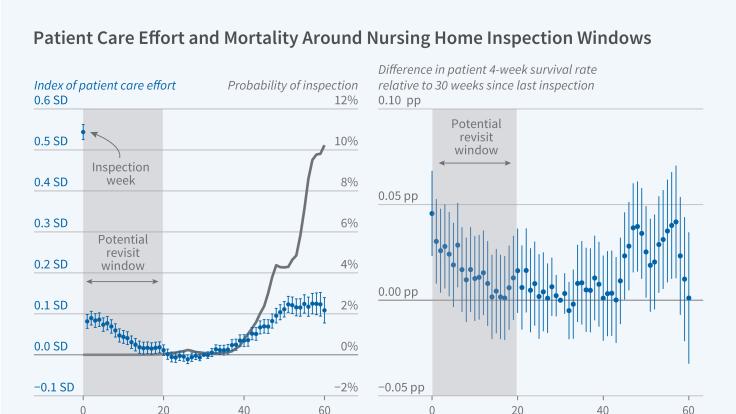
This research article examines whether individuals accurately perceive the relationship between income and life satisfaction. The study, pre-registered at the AEA RCT Registry (AEARCTR-0018251), was conducted with institutional approval from UCLA's IRB and received funding support from UCLA's Anderson School of Management Behavioral Lab. The research investigates potential misperceptions about how much income actually contributes to overall satisfaction and well-being. By employing rigorous experimental methodology, the authors explore whether people systematically overestimate or underestimate the impact of financial resources on their happiness. These findings have significant implications for understanding human decision-making regarding financial priorities and resource allocation. The research contributes to behavioral economics literature by shedding light on the disconnect between assumed and actual satisfaction derived from income, which matters for personal financial planning, policy development, and broader questions about what truly drives human well-being beyond monetary considerations.
Share on
A Diffusion-Model Subpopulation Digital Twin for Mobile Health Deployment: A Case Study on the HeartSteps Intervention
arxiv.org
July 25, 2026, 7:21 a.m.
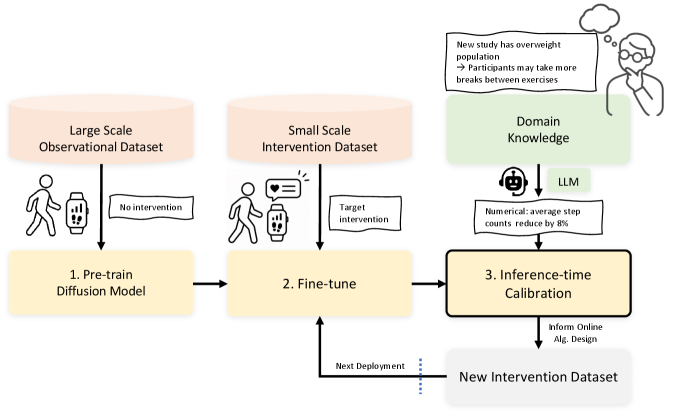
Researchers have developed "JITAI-Twins," digital twins of target subpopulations designed to test mobile-health intervention algorithms before real-world deployment. Using a conditional time-series diffusion model that maintains temporal consistency, the method integrates three information sources: pre-training on large observational datasets, fine-tuning on prior intervention deployments in related populations, and calibration from domain-expert input. The approach was validated across the HeartSteps series (versions 2-4), studying physical-activity suggestion interventions. Results demonstrate that JITAI-Twins reproduce target subpopulation temporal structures and between-participant variation more accurately than simpler simulators. This advancement addresses a critical challenge in mobile health: poorly designed algorithms can burden and disengage users. By enabling researchers to simulate and evaluate candidate online learning algorithms against realistic simulated users before deployment, JITAI-Twins provide a prerequisite tool for optimizing just-in-time adaptive interventions. This methodology promises to improve algorithm design decisions in mHealth interventions that deliver personalized nudges for health behaviors across hundreds of thousands of decision points.
Share on

The role of behavioral nudges in sustaining public health engagement through the “Tawakkalna” app: insights from healthcare professionals
www.frontiersin.org
July 25, 2026, 7:20 a.m.
This qualitative study examines how behavioral design features embedded in Saudi Arabia's Tawakkalna digital health application sustain public engagement beyond the COVID-19 pandemic. Researchers conducted semi-structured interviews with 24 participants including healthcare professionals, digital health strategists, and policymakers, applying Braun and Clarke's thematic analysis framework to identify patterns in behavioral design and engagement. Six key themes emerged: adaptive personalization effectively reduced notification fatigue, engagement varied significantly by age and emotional framing, ethical concerns centered on transparency and cultural alignment, system integration enhanced credibility, social and family influences amplified impact, and future designs should incorporate artificial intelligence-driven bidirectional nudges. The findings demonstrate that behavioral nudges like reminders, alerts, and tailored notifications can sustain health engagement when personalized and contextually relevant. This research matters because it provides evidence-based guidance for governments deploying digital health applications to maintain citizen engagement in preventive health behaviors during the post-pandemic era. The study underscores that effective sustained engagement requires applications to integrate adaptive, transparent, and socio-culturally attuned behavioral nudges supported by advancing AI technologies.
Share on