
Neoclouds Are Dying. But AI Compute Demand Is Exploding. How Is That Possible?
sebastianbarros.substack.com
Oct. 26, 2026, 3:14 p.m.
Analysts warns of a massive neocloud shakeout. Banks are getting nervous, GPU financing is becoming expensive, and trillions are being committed to AI infrastructure. Is an AI bubble burst near?
Share on
Stop Staring at Musk. Zuckerberg Is Taking Your Lunch.
sebastianbarros.substack.com
Oct. 25, 2026, 1:37 p.m.
Walk into any telecom boardroom right now, mention Elon Musk, and watch twenty executives reach for their blood pressure medication. Between SpaceX’s Q3 numbers showing Starlink at 13.6 million subscribers, direct-to-device constellations maturing, and Musk’s move on 800 MHz spectrum to build “Starlink Mobile,” operators are staring at the sky in a cold sweat.
They are looking in the wrong direction. Again.
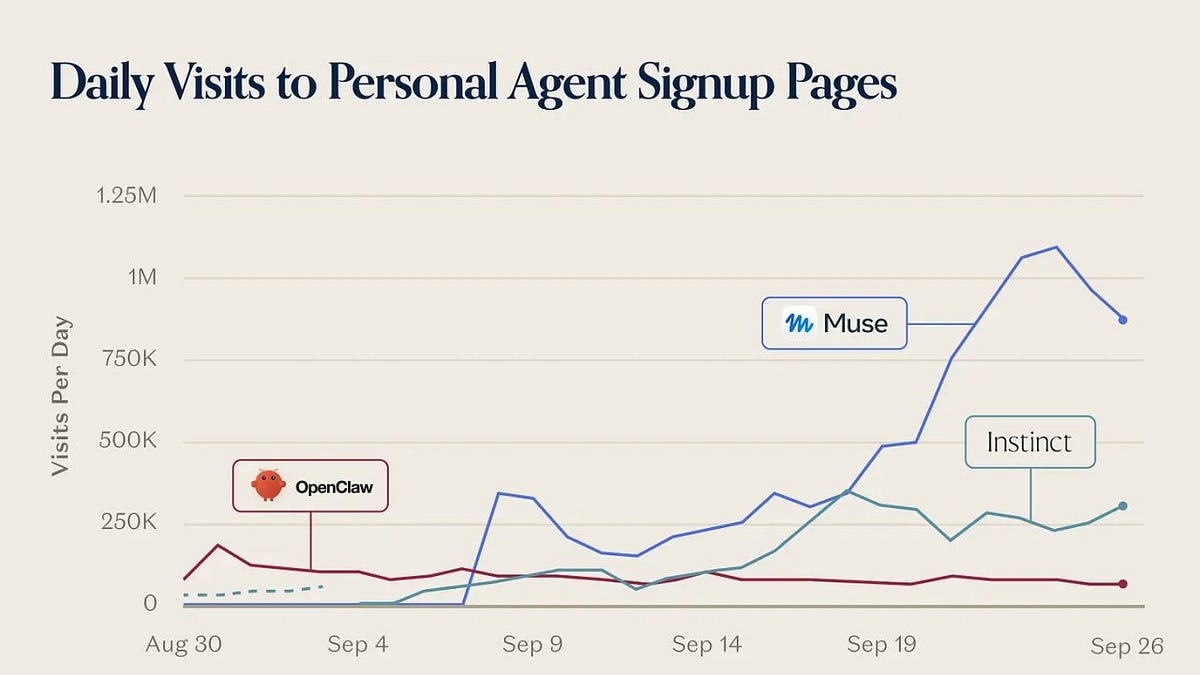
Sure, Musk is coming for your rural coverage and a slice of your mobility margin. But Mark Zuckerberg is coming for the only slide in your investor deck that still shows growth. For the past three years, every telco CEO on Earth has told analysts the same story: connectivity is flat, ARPU is dead, so future growth will come from B2B digital services. Operators will sell cloud, SaaS, automation, and AI agents to small- and medium-sized businesses and the mid-market.
Meta Muse is about to wipe that revenue off the map. Completely.
Share on
Occupy Earth: If I Ran a TowerCo, I Wouldn't Just Rent Musk Towers
sebastianbarros.substack.com
Oct. 24, 2026, 12:38 p.m.
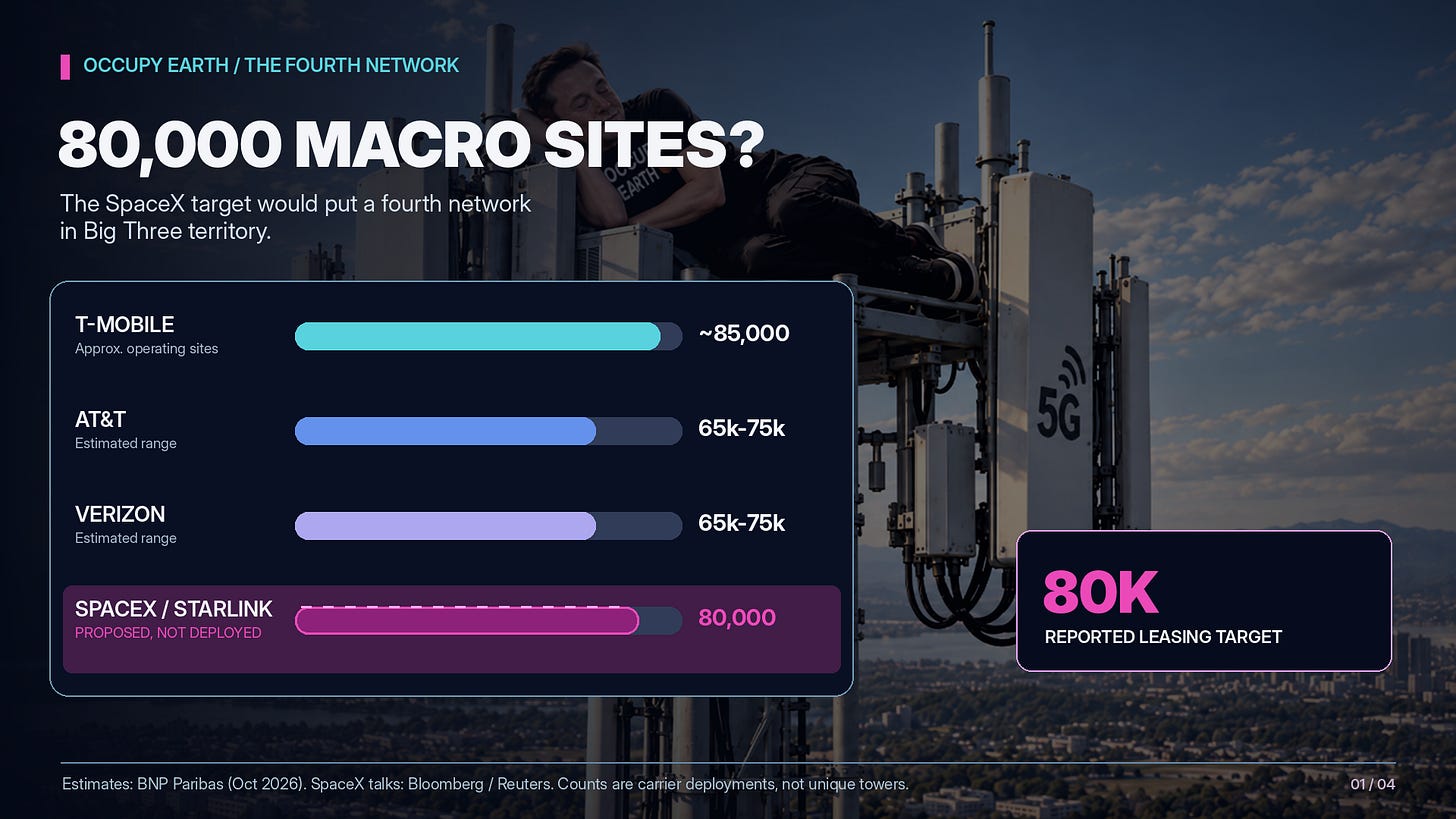
If I were running a TowerCo, I would not approach SpaceX with another presentation explaining how many towers I own. I would offer to build and operate its entire terrestrial physical network. My proposal would be simple: “Elon, you build the radios, satellites, software, and rockets. Give us the technical specifications and RF plan. We will deliver 80,000 operational sites in 18 months, with a contractual fallback to 24 months. Then, if you want, we hand you the keys.” That is a Build-Operate-Transfer (BOT) business, not another tower lease. And the commercial opportunity could be considerably larger.
Share on
Voice over NB-IoT NTN in 3GPP Release 20
research.samsung.com
Oct. 24, 2026, 7:05 a.m.
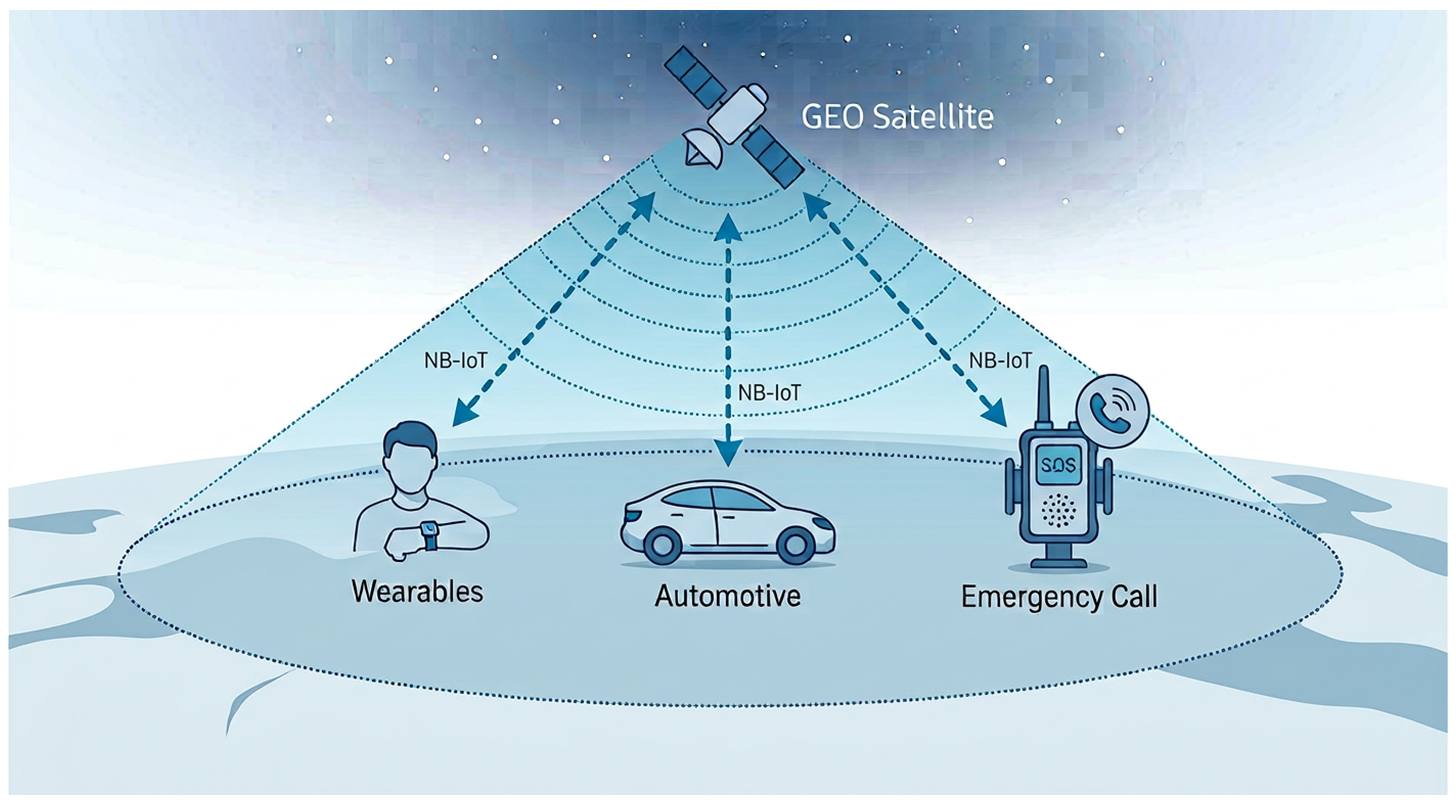
Voice over Narrowband Internet of Things Non-Terrestrial Networks (NB-IoT NTN) represents a significant evolution in 3GPP Release 20 standardization efforts. This work extends NB-IoT technology, originally designed in Release 13 for simplified IoT applications like smart metering and asset tracking with data rates of only 10-100 kbps, to now support voice communications over satellite infrastructure. Building upon the satellite adaptation introduced in Release 17, Release 20 expands voice capabilities beyond smartphones to encompass wearables and automotive applications, including satellite-based emergency voice services for vehicles. The enhancement addresses emerging requirements for voice communications in non-terrestrial environments while maintaining NB-IoT's core advantages: extended coverage through transmission repetition, efficient spectrum utilization via in-band deployment with 4G, and simplified device architecture. The development leverages existing optimization approaches including Cellular IoT Control Plane Optimization (CIoT CP) and Cellular IoT User Plane Optimization (CIoT UP). This standardization work matters because it enables critical voice connectivity in remote and underserved areas via satellite networks, extending essential communications capabilities to diverse device categories and emergency services.
Share on

AI-RAN and the Geopolitics of 6G: The Transformation of Global Telecommunications into Distributed Artificial Intelligence Infrastructure - https://debuglies.com
debuglies.com
Oct. 24, 2026, 7:05 a.m.
The emerging AI-RAN (Artificial Intelligence Radio Access Network) technology represents a strategic convergence of telecommunications, artificial intelligence, and computing infrastructure with profound geopolitical implications through 2031. On October 21, 2026, NVIDIA, Nokia, and T-Mobile completed a landmark AI-RAN call demonstration on T-Mobile's operational 5G network in Bellevue, Washington, utilizing Nokia Massive MIMO radios, CUDA-accelerated anyRAN software, and NVIDIA Aerial RAN Computer infrastructure. This achievement marks a significant commercial-network integration milestone, though production-scale economic viability and autonomous 6G functionality remain unproven. Beyond accelerating mobile networks, AI-RAN could transform telecommunications infrastructure into geographically distributed computing systems capable of supporting connectivity, real-time sensing, and automated decision-making. The industrial consequences are substantial, as telecom operators' distributed sites, fiber connections, and infrastructure could evolve into edge-computing platforms. Geopolitically, competitive boundaries between semiconductor manufacturers, telecom equipment vendors, cloud providers, and network operators are converging, concentrating strategic dependence in GPU ecosystems, AI toolchains, and accelerator supply chains. The decisive phase is expected during 2027–2029, when field trials, performance metrics, and early 6G standardization will determine viable architectures and inform government policy on autonomous infrastructure deployment.
Share on
Integrated positioning and communication via LEO satellites: A contemporary overview - npj Wireless Technology
www.nature.com
Oct. 24, 2026, 7:04 a.m.
# Summary
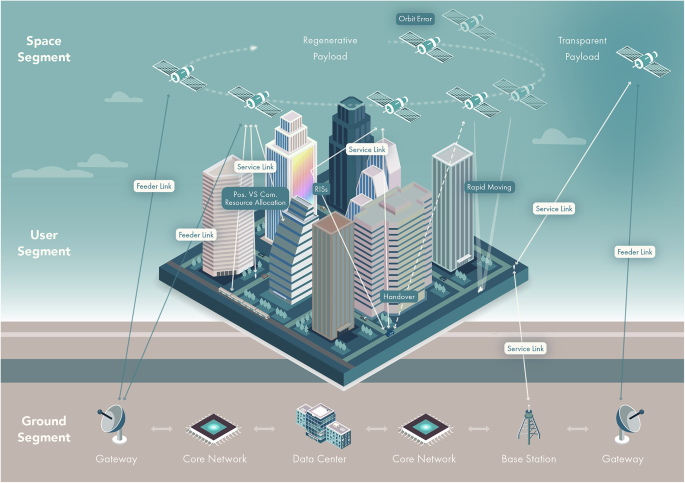
This article discusses integrated positioning and communication systems utilizing low Earth orbit (LEO) satellites, representing a convergence of two traditionally separate technological domains. LEO satellite constellations, operating at altitudes between 160 and 2,000 kilometers, offer unique advantages for simultaneously delivering precise positioning and reliable communication services globally. The integration of these capabilities addresses the growing demand for seamless connectivity in remote areas and emerging Internet of Things applications while reducing infrastructure costs through consolidated satellite networks. By combining positioning, navigation, and timing functions with communication services, integrated LEO systems enable more efficient spectrum utilization and simplified user equipment requirements. This dual-functionality approach has significant implications for telecommunications, emergency response, autonomous vehicle operations, and maritime applications. The work appears in npj Wireless Technology, which offers article processing charge waivers available on an ad-hoc basis following acceptance. This development reflects the industry's strategic shift toward multi-purpose satellite platforms that can serve increasingly diverse global connectivity needs.
Share on
Your eSIM can switch operators. But what will your team have to rebuild?
www.1ot.com
Oct. 24, 2026, 7:04 a.m.
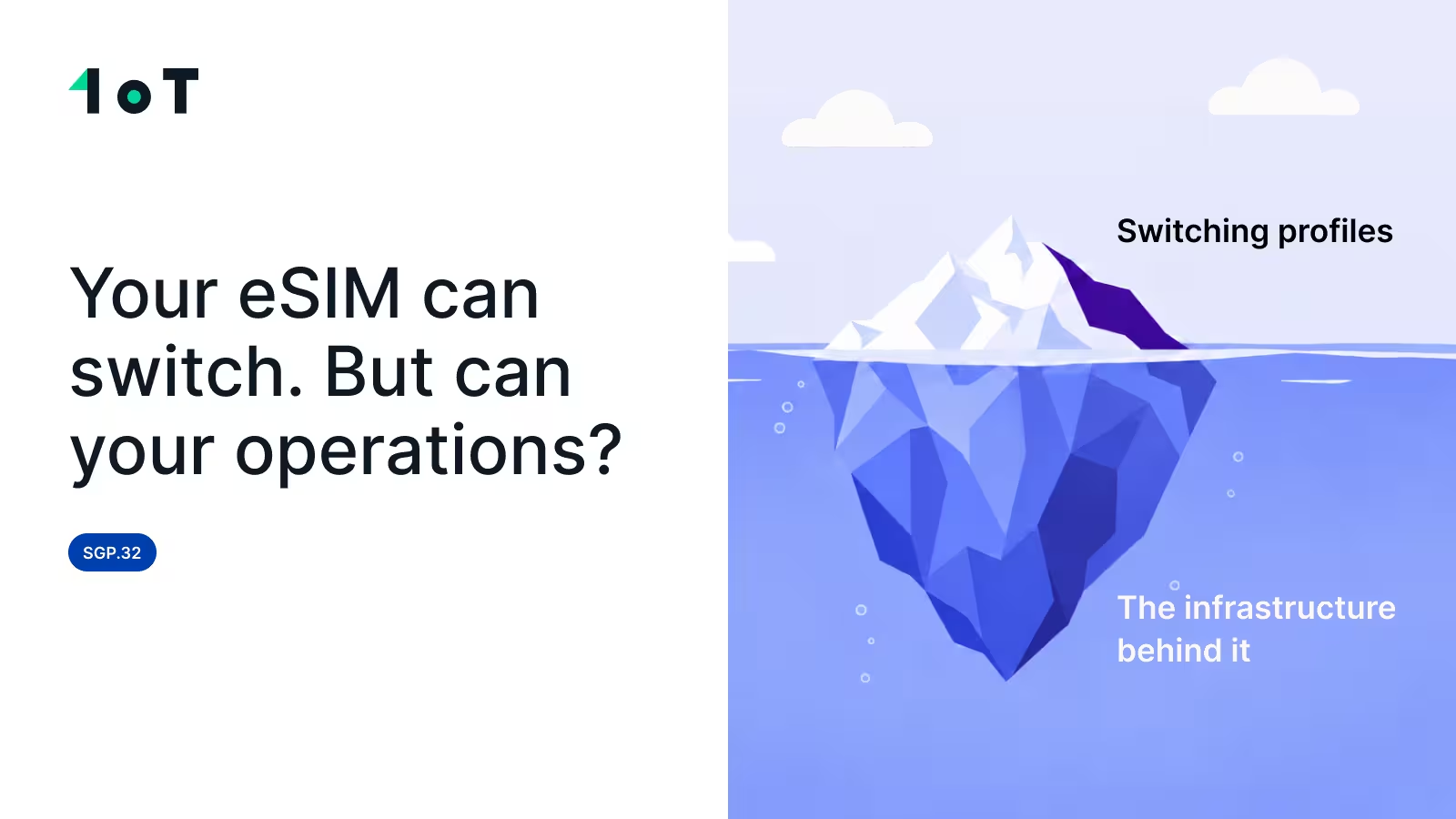
1oT has launched an eSIM connectivity service designed to address a critical pain point in the Internet of Things industry: vendor lock-in. The platform enables IoT companies to switch between telecommunications providers seamlessly, prioritizing operational speed and flexibility. The service offers 12 distinct telecoms profiles, allowing organizations to select connectivity solutions tailored to their specific use cases, geographic regions, and technological requirements. Currently, 1oT's infrastructure supports three million IoT devices across 173 countries, ranging from wildlife tracking systems like bird trackers to micro-mobility solutions such as e-scooters. This innovation matters significantly for the IoT sector because it reduces dependency on single providers, enhances cost competitiveness, and enables organizations to optimize their connectivity strategies dynamically. By eliminating contractual constraints, 1oT empowers enterprises to make agile connectivity decisions that align with evolving business needs and market conditions.
Share on
Conflict-Aware Autonomous Resource Orchestration for 5G Edge Slicing Using Multi-Agent Systems and LLMs
arxiv.org
Oct. 24, 2026, 7:04 a.m.
This paper addresses the challenge of dynamically orchestrating resources in 5G edge network slicing by proposing a novel two-timescale architecture that combines Large Language Models with multi-agent auction mechanisms. The system uses an LLM-based Strategist component to translate natural-language network operator intents into economic policy parameters such as budget and bidding aggressiveness at the macro scale. Concurrently, SPADE-based slice agents execute a deterministic Vickrey-inspired second-price auction mechanism to resolve real-time resource contention at the operational scale, with allocations enforced directly on Kubernetes CPU limits and Calico CNI bandwidth annotations. The researchers evaluated their approach on a real Kubernetes/Open5GS edge cluster across two scenarios repeated thirty times: a Smart-City scenario demonstrating rapid propagation of public-safety intents into measurable bid and bandwidth allocation changes, and a Hierarchical-slicing scenario showing priority-dependent differentiation, adaptation to demand fluctuations, and preservation of minimum guarantees. This approach matters because it enables mission-critical 5G edge applications requiring strict latency bounds and reliable bandwidth access to maintain quality of service through intelligent, responsive resource orchestration without the computational overhead and non-determinism of continuous LLM inference.
Share on

Des data centers assemblés en orbite par un robot: le pari fou d’Alatyr face à Google et SpaceX
cafetech.substack.com
Oct. 23, 2026, 1:58 p.m.
“Personne ne l’a encore jamais fait”. Emeric Lhomme mesure l’ampleur du défi qu’il s’est lancé avec Alatyr. À la tête de cette start-up française de 11 salariés, cet ancien d’ArianeGroup ne veut pas seulement déployer en orbite des data centers dédiés à l’intelligence artificielle générative, à l’image des projets portés par Google ou encore SpaceX. Il ambitionne d’aller plus loin: assembler dans l’espace, à l’aide d’un robot, plus de 15.000 mètres carrés de panneaux solaires pour alimenter en énergie les GPU chargés d’entraîner ou d’exécuter les modèles d’IA. “Un défi d’ingénierie, mais aussi de financement”, reconnaît-il.
Share on

Plombé par l’IA, le marché des smartphones accuse une chute historique
cafetech.substack.com
Oct. 23, 2026, 1:57 p.m.
Jamais le marché des smartphones n’avait connu une telle dégringolade. Plombées par l’envolée spectaculaire des prix des puces mémoire, les ventes ont chuté de 22% au troisième trimestre, selon les estimations d’IDC. Un plongeon bien plus marqué que ne l’anticipait le cabinet avant l’été. Et le pire reste à venir, prévient-il: le recul devrait s’accentuer au quatrième trimestre, qui comprend la période cruciale des fêtes de fin d’année. Sur l’ensemble de 2026, IDC table désormais sur une contraction historique de 16,7%, qui ramènerait le marché à son plus bas niveau depuis 2013. Le rebond, lui, n’est pas attendu avant 2028.
Share on
OCCUPY EARTH. MUSK WANTS 80,000 CELL SITES. TELCOS HAVE A BIG PROBLEM.
sebastianbarros.substack.com
Oct. 23, 2026, 1:52 p.m.
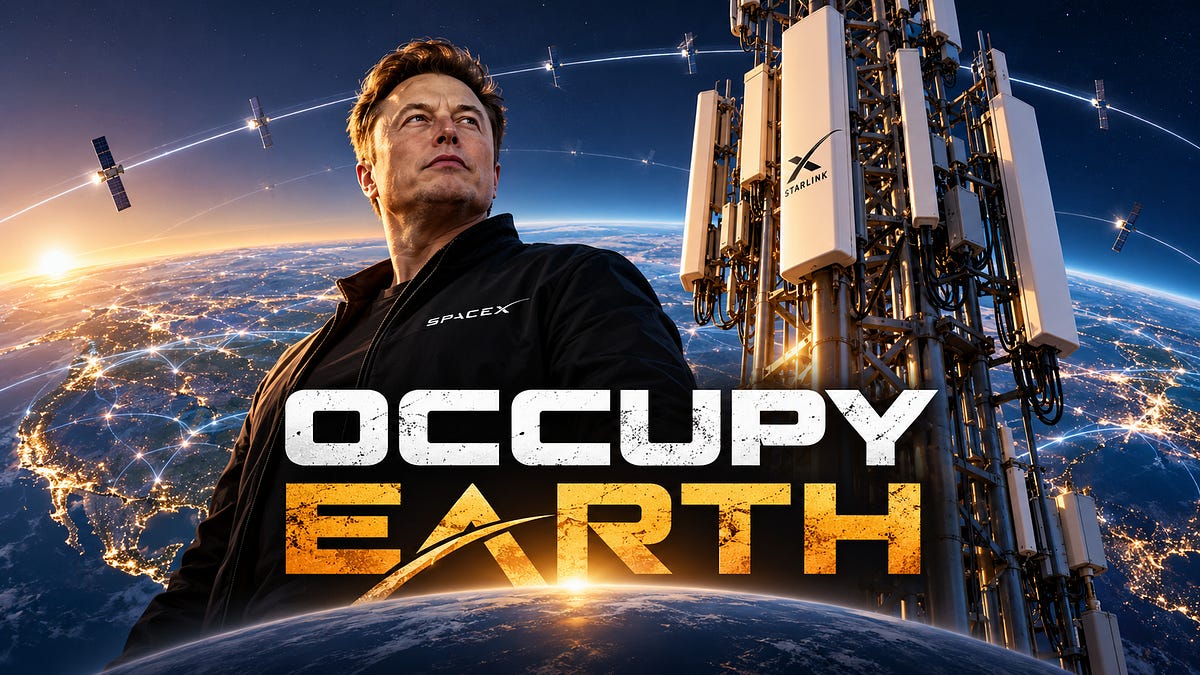
On October 22, Bloomberg reported that SpaceX is negotiating access to at least 80,000 cellular sites across the United States, including discussions with Crown Castle. This is roughly half the country’s 158,500 purpose-built towers, although not every cellular site is a traditional tower. The ambition is becoming obvious. Musk is not trying to build a better satellite service. He is preparing to compete with AT&T, Verizon and T-Mobile as a fourth nationwide mobile operator.
Share on

The Telco AI Mafia. Meet the Companies Betting on NVIDIA to Get Rich from AI.
sebastianbarros.substack.com
Oct. 23, 2026, 1:51 p.m.
Twenty years after the PayPal Mafia helped shape the internet economy, a small group of telecom companies is making a similar bet on artificial intelligence. NVIDIA is bringing them together, and some are already making serious money. But who will actually get rich?
Share on
The Myth That Indoor Coverage Will Keep Mobile Telcos Safe From Musk
sebastianbarros.substack.com
Oct. 21, 2026, 1:29 p.m.
"We will also have direct-to-cell, high-bandwidth direct-to-cell capability, and we will be building out our terrestrial network.”
Musk was not describing Starlink as a satellite-only mobile service. He was describing a future network that combines space and ground infrastructure, with broad connectivity anywhere SpaceX is allowed to operate. That is important because one of the most common arguments I hear against Starlink becoming a serious mobile competitor is indoor coverage. Satellites struggle to reach phones deep inside buildings, and much smartphone usage happens indoors. Therefore, the argument goes, existing mobile operators have a natural protection that Musk cannot easily overcome.
The physics are correct; however, I think the business conclusion is wrong.
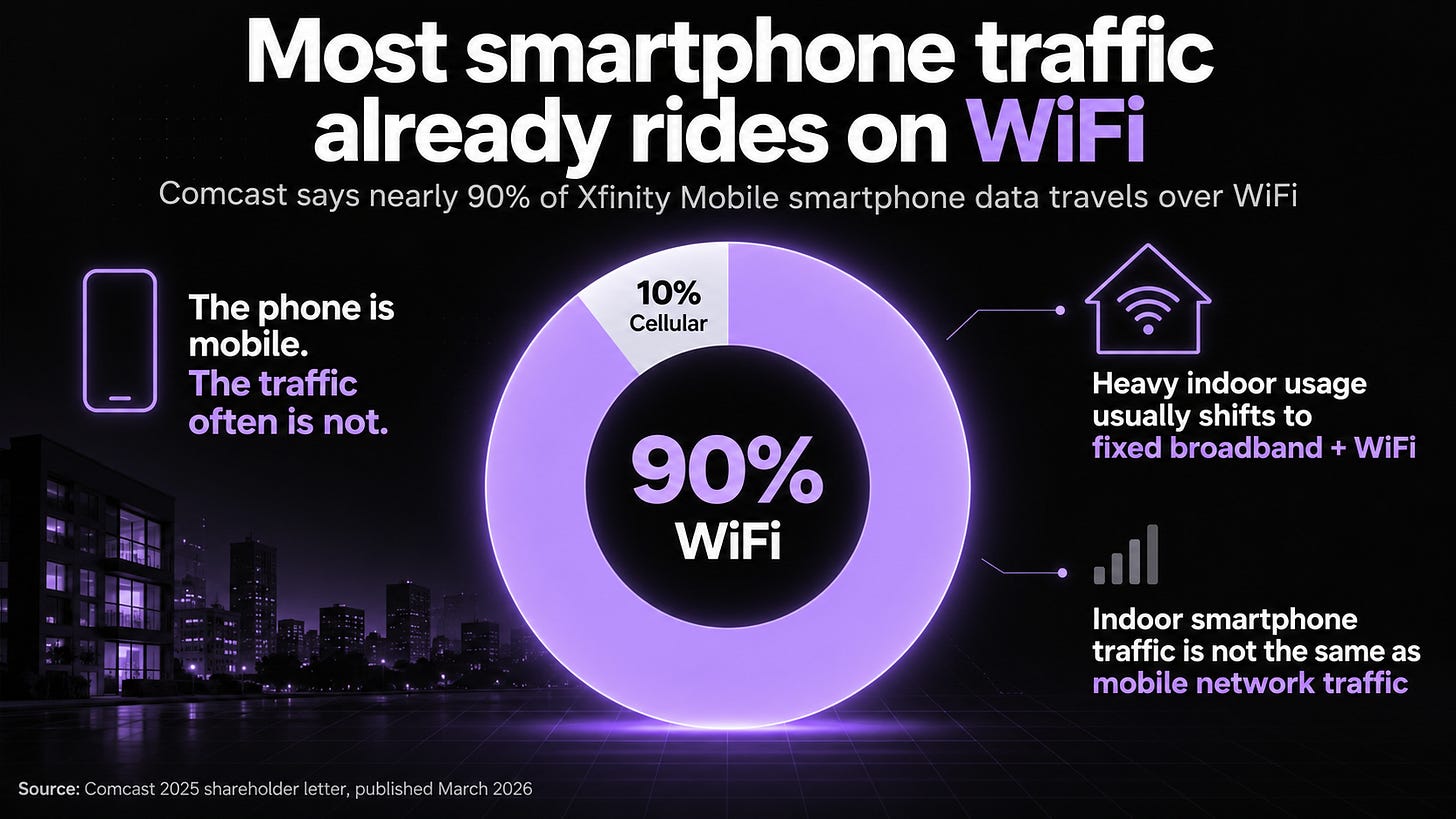
Most heavy indoor smartphone traffic already runs over WiFi. The fact that people use their phones indoors doesn't mean the cellular network carries all those bytes. Add WiFi to the picture, then add the terrestrial network Musk says SpaceX intends to build, and indoor coverage starts looking much less like a defensive wall around the mobile industry.
Share on
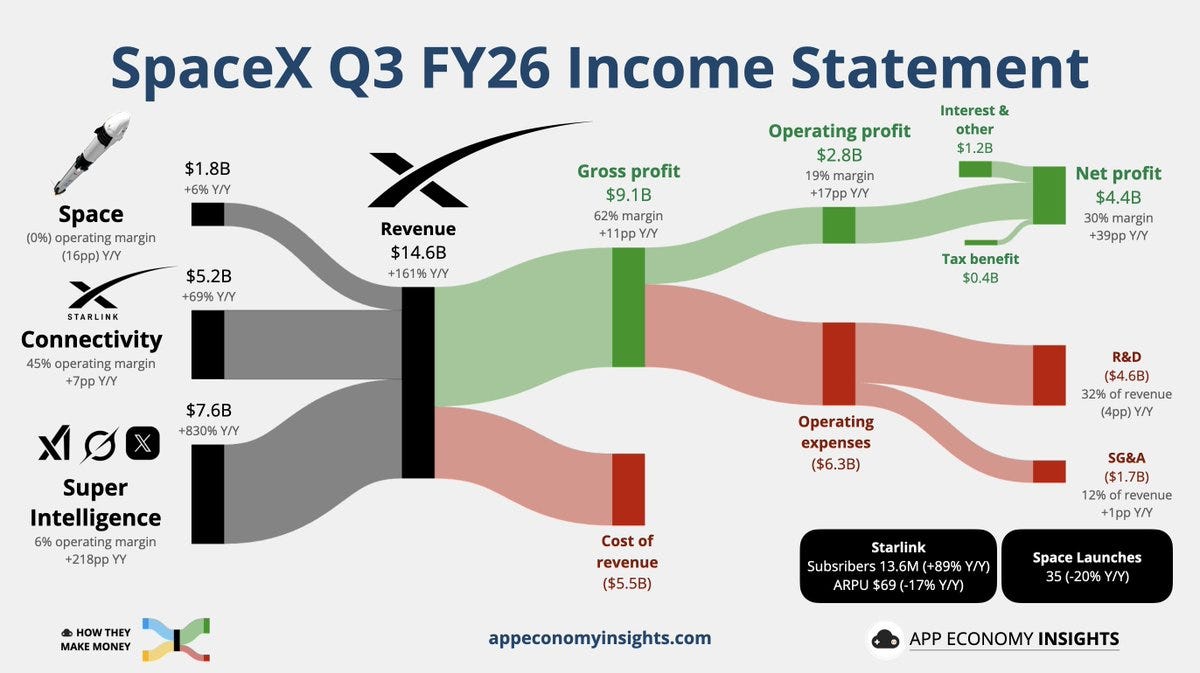
Q3: SpaceX Grew 161%. 10 Things Telcos Need to Understand.
sebastianbarros.substack.com
Oct. 21, 2026, 9:07 a.m.
SpaceX reported $14.6 billion in revenue in the third quarter of 2026, up 161% from the prior year. More revealing is the explosion of the AI business. Its superintelligence division produced most of the growth, while connectivity generated roughly 85% of operating profit. SpaceX is building a business in which rockets lower the cost of connectivity, connectivity brings customers and profits, and compute opens another market.
For the Telecom industry, the question is where that combination shifts control. SpaceX can supply a Telco with coverage while developing the network, applications, and direct customer relationships that could eventually weaken that Telco´s position.
Share on

European Telcos Anticipate the Next Musk-Style Move
sebastianbarros.substack.com
Oct. 20, 2026, 9:06 a.m.
In mobile communications, without spectrum you are nothing. Yes, nothing. You can have the most advanced satellites, billions of dollars, revolutionary antennas and incredible software, but without the legal right to transmit on usable frequencies, you cannot operate a commercial mobile network. You need spectrum that works with the devices you want to connect, in the countries where you want to operate. Otherwise, you need somebody willing to let you use theirs.
Elon Musk understands this very well. Over the past year, SpaceX has moved aggressively to secure spectrum rights, including its approximately $20 billion agreement with EchoStar and, more recently, an agreement to acquire up to 14 MHz of nationwide 800 MHz spectrum in the United States. These are not random investments. They are steps toward a business that could compete with traditional mobile operators without starting with all the infrastructure and legacy obligations of a traditional telco.
Now European operators appear to be learning from what is happening across the Atlantic. On October 19, Deutsche Telekom, Orange, Telefónica and Vodafone announced a joint initiative to explore acquiring satellite spectrum rights across Europe. My interpretation is that they are preparing for the possibility that Musk, or another satellite operator, eventually decides that selling wholesale satellite coverage to telcos is less attractive than taking a larger share of the mobile business.
And this time, the telcos want to be in a position to negotiate.
Share on
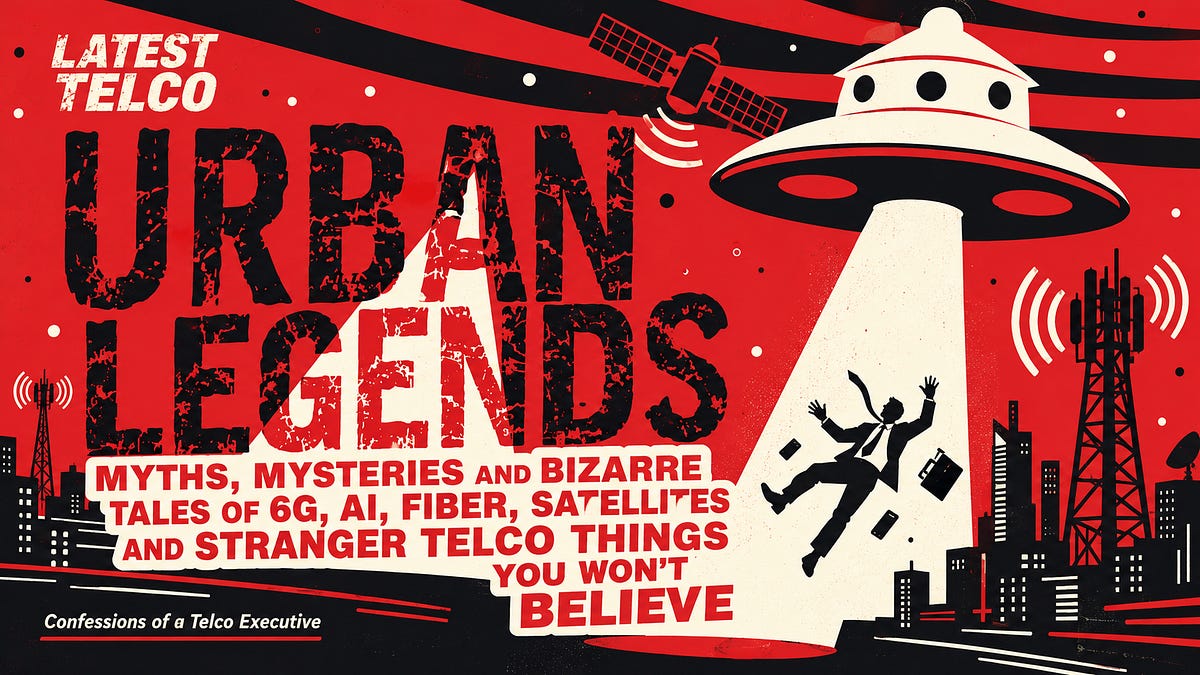
The 10 Telco Urban Legends
sebastianbarros.substack.com
Oct. 20, 2026, 9:05 a.m.
Every industry has its urban legends. In telecom, we put ours into PowerPoint presentations, attach a five-year forecast, and ask the board for a few billion dollars. I have spent so many years watching vendors promise that the next technology will bring new revenues, lower costs, and happier shareholders. Operators buy the equipment, deploy the networks, and eventually discover that customers never agreed to the business case. With 6G, AI, satellites, and fiber, some familiar stories are coming back. Here are ten of my favorites, and why I don’t buy them.
Share on
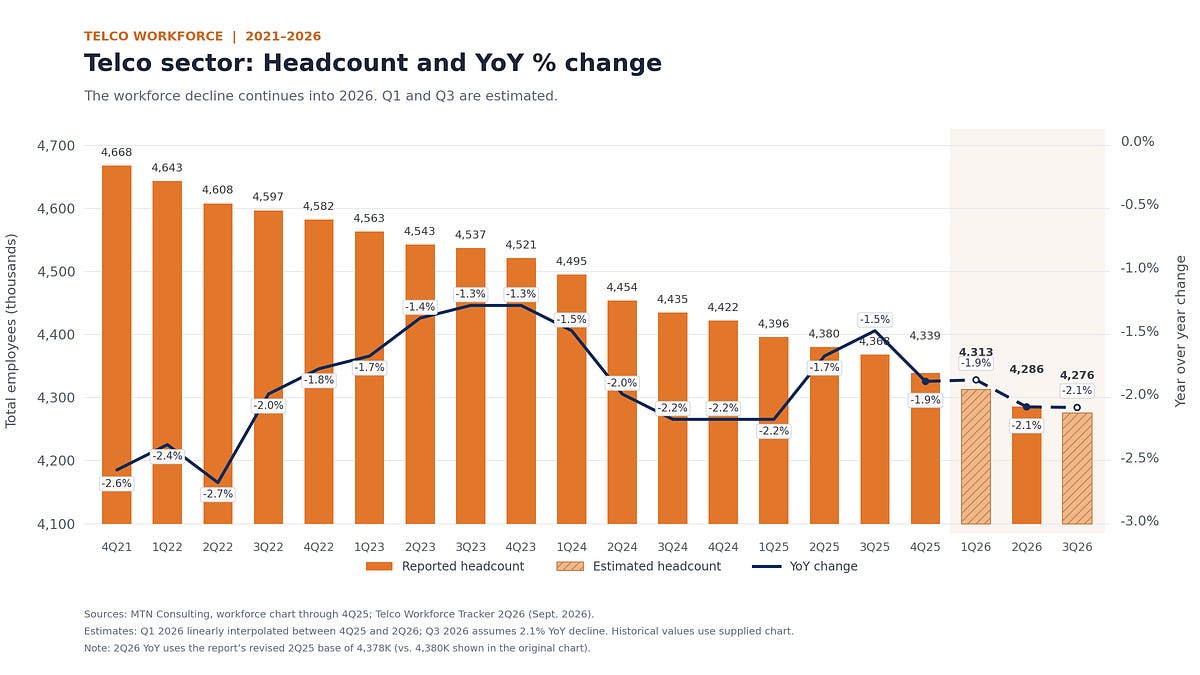
Telcos Were Cutting Jobs Long Before AI. Now AI Gets the Credit.
sebastianbarros.substack.com
Oct. 18, 2026, 2:55 p.m.
Telecom operators have been cutting jobs for decades. As technology evolved, we automated network operations, outsourced field maintenance, consolidated customer care, closed retail stores, and eliminated entire departments. With revenues struggling to grow, reducing the workforce became one of the industry’s favorite ways to protect profitability.
Now we have artificial intelligence, and suddenly the same old strategy has become an AI transformation story. Apparently, reducing employees is no longer just cost-cutting. It is evidence that your company is becoming AI native.
Share on
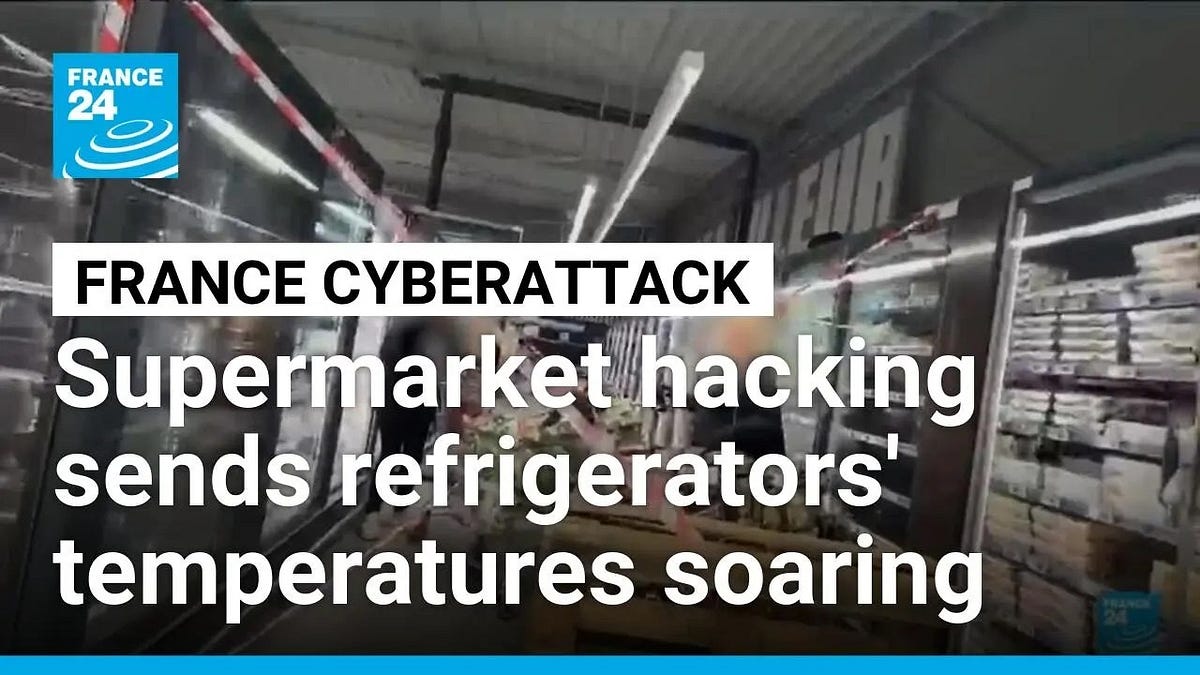
Telcos, Who Protects Physical AI When Hackers Fool Its Senses?
sebastianbarros.substack.com
Oct. 17, 2026, 10:25 p.m.
On October 12, 2026, hackers disrupted refrigeration systems across France. Around 700 supermarkets were affected; some refrigerators reportedly reached 50 degrees Celsius, and Intermarché reported losses running into tens of millions of euros. Software controlling ordinary equipment had become a way to destroy physical inventory.
This was a refrigeration controller attack, not an AI sensing attack. But imagine a 200-pound humanoid carrying equipment beside workers, or an autonomous car approaching a crossing. An attacker might not even need to control the machine. Manipulating what it sees or believes about its surroundings could be enough to produce a dangerous decision.
For telcos, this opens an interesting question. Could networks help protect Physical AI by independently verifying what machines see? And could that become a new business beyond simply connecting them?
Share on
The Mother of All Telco IPOs Is Betting That the Telco Is Dead
sebastianbarros.substack.com
Oct. 17, 2026, 4:23 p.m.
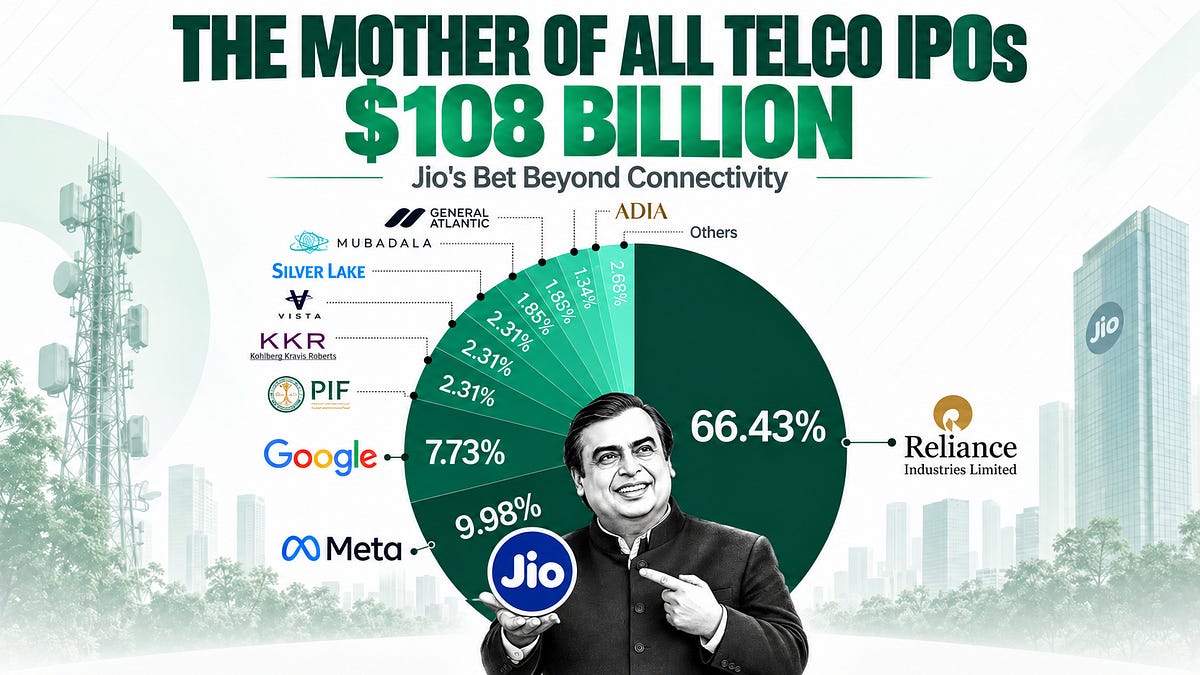
Next week, investors will be asked to value Jio Platforms at about $108 billion. The company has 533 million mobile customers, generates almost all its revenue in India, and collects an average of just $2.27 per mobile customer per month. Those aren't the numbers you'd normally associate with one of the world’s most valuable telecom companies.
But Mukesh Ambani isn't simply selling a mobile operator story. Instead, he is selling the possibility of a national digital platform built on a mobile network: AI, cloud, entertainment, enterprise software, connected homes, and distribution for some of the world's largest technology companies. If that works, the network becomes the entry ticket, not the final product. And Jio might become the example other telcos have spent twenty years talking about without delivering.
The question is whether investors are already paying for that platform or just for an exceptionally good telecom business.
Share on
Towards Resilience: Slice-Driven Orchestration of Mobile IoMT in 6G-Edge-Continuum
arxiv.org
Oct. 17, 2026, 7:05 a.m.
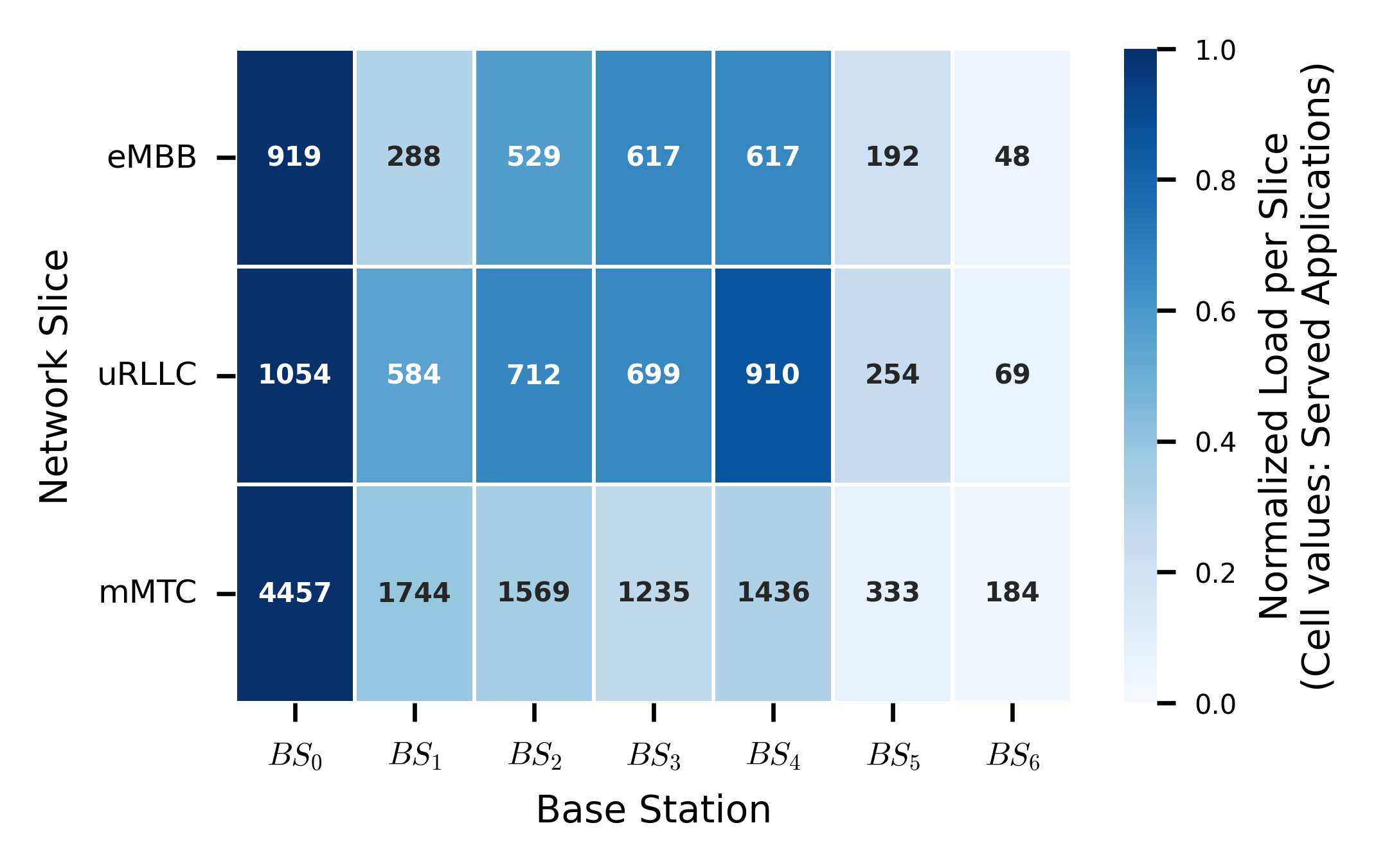
Emerging healthcare applications including real-time diagnostics, remote monitoring, and computer-assisted surgery demand strict Quality of Service guarantees while managing limited edge resources. Current Internet of Medical Things (IoMT) orchestration approaches prioritize communication metrics like latency and bandwidth but neglect edge resource constraints and dynamic adaptation. This paper introduces a novel resource-slicing-based adaptive orchestration framework integrating 5G network slicing, resource-aware orchestration, and mobility-aware task offloading. The system assigns IoMT services to distinct 5G network slices while jointly considering CPU capacity, memory, and storage availability, enabling more efficient service placement. It additionally supports user mobility and dynamic task offloading to maintain service continuity under changing conditions. SimPy-based simulation validation demonstrates the method enhances deployment efficiency, reduces request blocking, and improves user acceptance across diverse IoMT scenarios. This work addresses critical challenges in distributed edge computing environments where traditional cloud-centric approaches suffer from high latency and connectivity dependency, while edge resources remain limited and heterogeneous despite their proximity advantage.
Share on