
AI Will Not Save Telcos. It Will Expose Them
sebastianbarros.substack.com
March 23, 2026, 2:43 p.m.
Artificial intelligence is not a telecom strategy. It is the fastest and most unforgiving way to discover whether one exists. The assumption behind much of the current discourse is that intelligence can be added to an organization in the same way capacity or software is added. Deploy a model, integrate it into workflows, automate decisions, and the organization becomes smarter. That logic is appealing because it frames AI as an upgrade. It avoids confronting the structure of the business itself. But organizations are not empty systems waiting to be enhanced.
Share on

Fraudes téléphoniques à l’IA : pourquoi 38 % des clients pourraient quitter leur opérateur
www.servicesmobiles.fr
March 22, 2026, 11:16 a.m.
Depuis quelques années, le spectre des fraudes téléphoniques alimentées par l’IA s’étend bien au-delà des frontières américaines. D’après le rapport « State of the Call 2026 » publié par Hiya, une entreprise internationale spécialisée dans la protection des communications, les appels indésirables n’épargnent désormais aucun marché majeur. En moyenne, un consommateur reçoit 7,4 appels non sollicités par semaine – un chiffre qui grimpe jusqu’à près de 10 appels hebdomadaires aux États-Unis et culmine en France, où les volumes restent les plus élevés d’Europe. Plus inquiétant encore, ce flot d’appels connaît une croissance annuelle de 16 %, tendance observée sur tous les territoires interrogés.
Share on
Smartphones : les fabricants chinois augmentent leurs prix face à la flambée des composants
www.servicesmobiles.fr
March 22, 2026, 11:15 a.m.
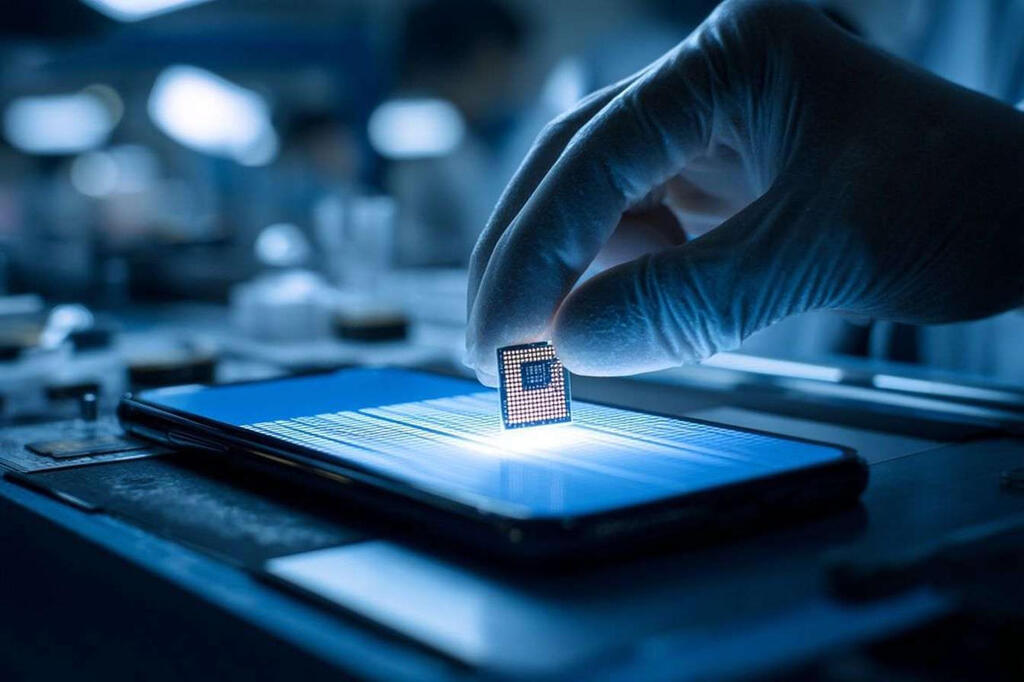
Derrière ces décisions commerciales se cache une réalité industrielle complexe. Le marché mondial subit de plein fouet une véritable pénurie de puces mémoire, alimentée par la forte demande émanant notamment du secteur des serveurs pour l’intelligence artificielle. Parallèlement, les capacités de production peinent à suivre. Les fournisseurs ne peuvent augmenter leurs volumes aussi vite qu’ils le souhaiteraient. De surcroît, la flambée du prix des matières premières, métaux ou énergie, accentuée par les incertitudes géopolitiques actuelles, alourdit davantage la facture.
Share on
Un ordinateur IA qui fonctionne sans cloud : la nouvelle stratégie de Perplexity
www.servicesmobiles.fr
March 22, 2026, 11:08 a.m.
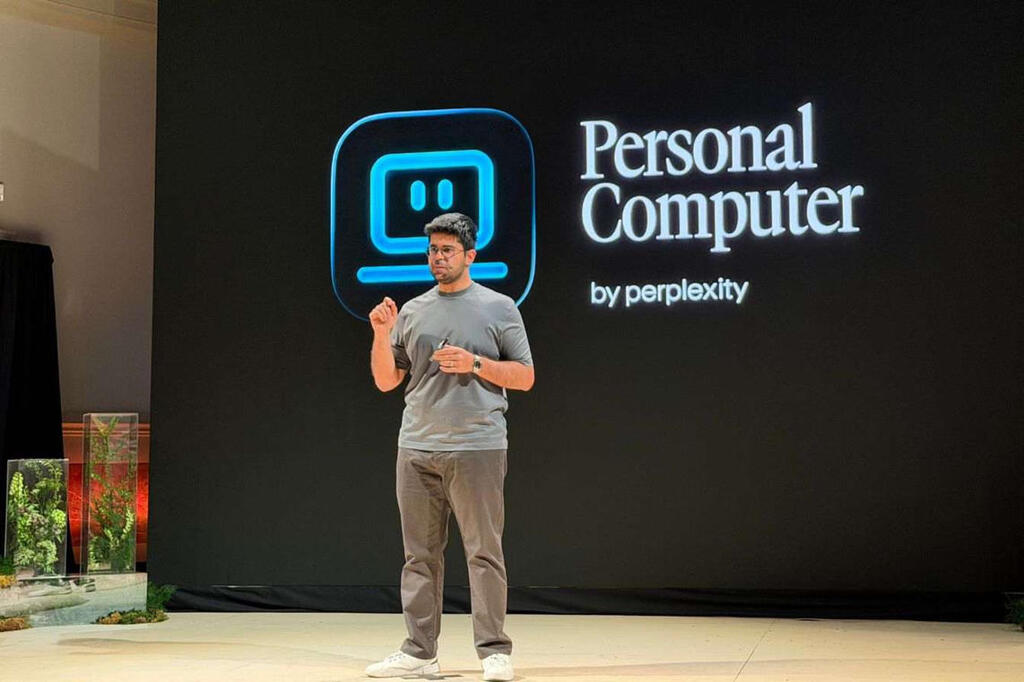
Contrairement à la majorité des solutions du marché qui privilégient le cloud, ce « Personal Computer » mise tout sur une expérience entièrement locale. L’agent IA préinstallé fonctionne en continu sur la machine : il analyse, automatise et assiste l’utilisateur dans sa gestion quotidienne des documents, courriels ou applications, tout en évitant les interruptions entre les différentes sessions. L’accès direct aux fichiers sans passer par un serveur centralisé offre un avantage décisif : la latence serait cinq fois inférieure aux alternatives cloud, selon les annonces de Perplexity. Un argument de taille pour ceux qui exigent réactivité et respect de leur vie privée.
Share on

Amazon is Entering the Smartphone Market (Again)
sebastianbarros.substack.com
March 22, 2026, 11:05 a.m.
It might sound like déjà vu, but it isn’t. According to recent Reuters reports, Amazon is quietly preparing to reenter the smartphone market under the highly classified “Project Transformer.”Twelve years after the catastrophic failure of the Fire Phone, the company is attempting a surgical hardware reboot. This time, the strategy is radically different. Rather than engaging in a head-to-head battle with the Apple and Google app store duopoly, Amazon is pivoting to an entirely new category: an AI-assisted “anti-smartphone.” This minimalist, agentic dumbphone is not designed to compete on hardware specs or app ecosystems; it is engineered strictly as a frictionless tether to accelerate Amazon’s proprietary flywheel of e-commerce, advertising, and Prime media.
Share on

Wow. T-Mobile and NVIDIA launches a "Robotic AI RAN"
sebastianbarros.substack.com
March 17, 2026, 10:54 a.m.
I’m not exaggerating: “Robotic AI Radio” is the exact phrase Jensen used during GTC 2026. What we are witnessing is a fundamental rewiring of how the world computes, and this groundbreaking development was showcased alongside 120 different robots at GTC 2026 today. This deployment is the first fruit of the partnership between Nokia and NVIDIA for building their Aerial RAN product. It is a massive architectural shift that incorporates GPUs directly into the RAN (Radio Access Network) for two critical purposes: improving RF signal processing and, crucially, enabling physical AI inference right at the edge. Although we are really early in the game, it is abundantly clear that AI has left the central datacenters and training labs. It is now all about the physical world and inference, where telcos can play a big role.
Share on

Why NVIDIA is Obsessed with Telecom?
sebastianbarros.substack.com
March 12, 2026, 8 a.m.
NVIDIA’s ambition is not to conquer a relatively small, low-growth niche business. As is typical of CEO Jensen Huang’s playbook, the strategy is far more visionary. NVIDIA is putting immense effort into telecom because it is the necessary physical gateway to a much larger prize: a $500 billion top-line opportunity driven by the automation of the physical world. They aren’t trying to build better radios; they are building the global nervous system for Physical AI.
Share on

For every $5,000 spent on AI, Telcos capture $1
sebastianbarros.substack.com
March 9, 2026, 3:47 p.m.
MWC 2026 is over, and the hype hangover begins. Back to reality, there is one metric the telecom industry should look at right now: how much money we are actually making from AI. Not how much AI we deploy internally, not how many partnerships we announce, but real revenue generated by operators. This has been the industry’s problem for decades as Telcos build the infrastructure, enable the ecosystem, carry the traffic, and then watch someone else capture the value.In 2025, the global AI economy generated roughly $1.5 trillion. At best, telecom operators captured about $300 million in direct AI revenue. Even if the definition is stretched to include connectivity and other indirect services, the most optimistic estimates reach around $4 billion. The sense of déjà vu is hard to ignore.Telcos have already invested well over $300 million in AI and are deploying it across networks and operations, yet we capture only about 0.02% of the AI economy. The opportunity is massive. But if telecom does not fix how value is captured, AI will repeat the same story we already lived through with cloud, apps, and streaming.
Share on

Linux Foundation, NVIDIA Want 6G Open Source. Washington Agrees.
sebastianbarros.substack.com
March 1, 2026, 2:53 p.m.
In the early 2000s, Linux altered the balance of power in computing. It dismantled the tight vertical integration model that vendors like Sun and IBM relied on and replaced it with a shared software foundation that ran on almost any hardware. The operating system stopped being a proprietary control point and became a common infrastructure. Value moved up the stack. Ecosystems expanded. The industry shifted from closed systems to programmable platforms.Two decades later, a similar attempt is unfolding in telecom. A Western coalition led by the Linux Foundation, seeded by US FutureG funding and joined by NVIDIA, DeepSig, Ericsson, and Nokia, is pushing to create a “Linux of RAN” through the OCUDU initiative. The target is the CU and DU layer, the programmable heart of the radio network. If this effort gains real deployment, it could reshape a 35 to 40 billion dollar RAN market, open the baseband layer to new entrants, and accelerate a structural split in 6G between Western and Chinese ecosystems.
Share on

Kinetic Tokens Are a Trillion Dollar Opportunity for Telcos
sebastianbarros.substack.com
Feb. 25, 2026, 2:23 p.m.
A few days ago, John Saw introduced a term that reframes how we think about AI in the physical world. He called it the kinetic token. His argument is simple but structural: If large language models are built on informational tokens that represent fragments of text, then machines that move, lift, weld, or drive must be built on atomic units of time-indexed physical state and not just symbols. Measurements are tied to position, velocity, force, energy, and identity.That shift marks the boundary between Language AI and Physical AI. In one world, tokens optimize probability distributions over words. In the other, tokens sit inside control loops where milliseconds translate into motion, and error margins translate into safety risk. When intelligence leaves the cloud and enters factories, roads, ports, and robots, the unit of computation changes. And with it, the infrastructure and monetization logic must change as well.
Share on

Pika - Where Your AI Self is born
www.pika.me
Feb. 24, 2026, 2:25 p.m.
Create a living AI version of you, or whoever you want to be.Your AI Self talks, posts, remembers, and grows, so you can live your best life—without all those silly human limits.
Share on

OpenAI Is Going Full-On Devices. What That Means for Telecom
sebastianbarros.substack.com
Feb. 23, 2026, 5:22 p.m.
In the last three months, OpenAI has moved from speculation to reality. Reporting based on sworn court filings confirms a working prototype and indicates that the first hardware product will not ship before late February 2027, alongside a branding pivot away from the “io” name. Executive statements at Davos anchor a reveal window in the second half of 2026.More importantly, first-party hiring signals describe an end-to-end consumer device stack: custom silicon, embedded systems, operating system kernel and frameworks, camera firmware, secure boot, A/B OTA infrastructure, and hardened software supply chain controls. The pattern matches with OpenAI building a vertically integrated hardware platform designed to sit beside the smartphone and control the ambient AI interface layer around daily digital life.OpenAI is leaving chat interfaces behind and moving into the physical world.
Share on

IoT Is Hot Again. Thank Satellites.
sebastianbarros.substack.com
Feb. 17, 2026, 4:01 p.m.
Between 2010 and 2020, IoT was positioned as telecom’s next growth engine. Forecasts projected tens of billions of devices, recurring revenues, and deep enterprise integration. The volume materialized, but the value did not.By the end of 2025, global IoT connections reached roughly 21 billion, according to IoT Analytics. Cellular IoT alone accounts for approximately 4.5 billion connections and is projected to reach 8 billion by 2031, according to the Ericsson Mobility Report. On paper, scale exists. IoT connections are projected to double by 2031, but most growth comes from short-range technologies rather than cellular.However, the economics of this business tell a different story. Cellular IoT ARPU in many markets ranges from $1 to $5 per device per month for NB-IoT and LTE-M deployments. Even broadband IoT modules, such as LTE Cat 1, operate at narrow connectivity margins. Compare that to satellite IoT, where legacy plans often range from 40 to 70 dollars per device per month. Volume versus premium.
Share on

Is the SaaSpocalypse Coming or Not?
sebastianbarros.substack.com
Feb. 16, 2026, 3:49 p.m.
In early February, more than $285 billion in software market value was lost in a single session following the release of enterprise agents by Anthropic and OpenAI. Within days, cumulative losses across SaaS names crossed $1 trillion. The IGV Software Index fell roughly 30% from its late September peak. Forward earnings multiples compressed from around 39x to near 21x in a matter of months. Short sellers reportedly generated more than $20 billion in profits in 2026 positioning against legacy SaaS.
Share on

Chinese automakers want to come to US. They could be here fairly soon
live-kesq.pantheonsite.io
Feb. 16, 2026, 9:52 a.m.
Chinese car companies make more vehicles than anyone else on Earth and export more as well. But high tariffs and hostile US-China trade relations have kept them out of the American market.That’s likely to change, according to experts, with Chinese autos hitting US showrooms in the next five to 10 years.
Share on
A Tale of 3 Kings: The battle for the home
sebastianbarros.substack.com
Feb. 15, 2026, 4:21 p.m.
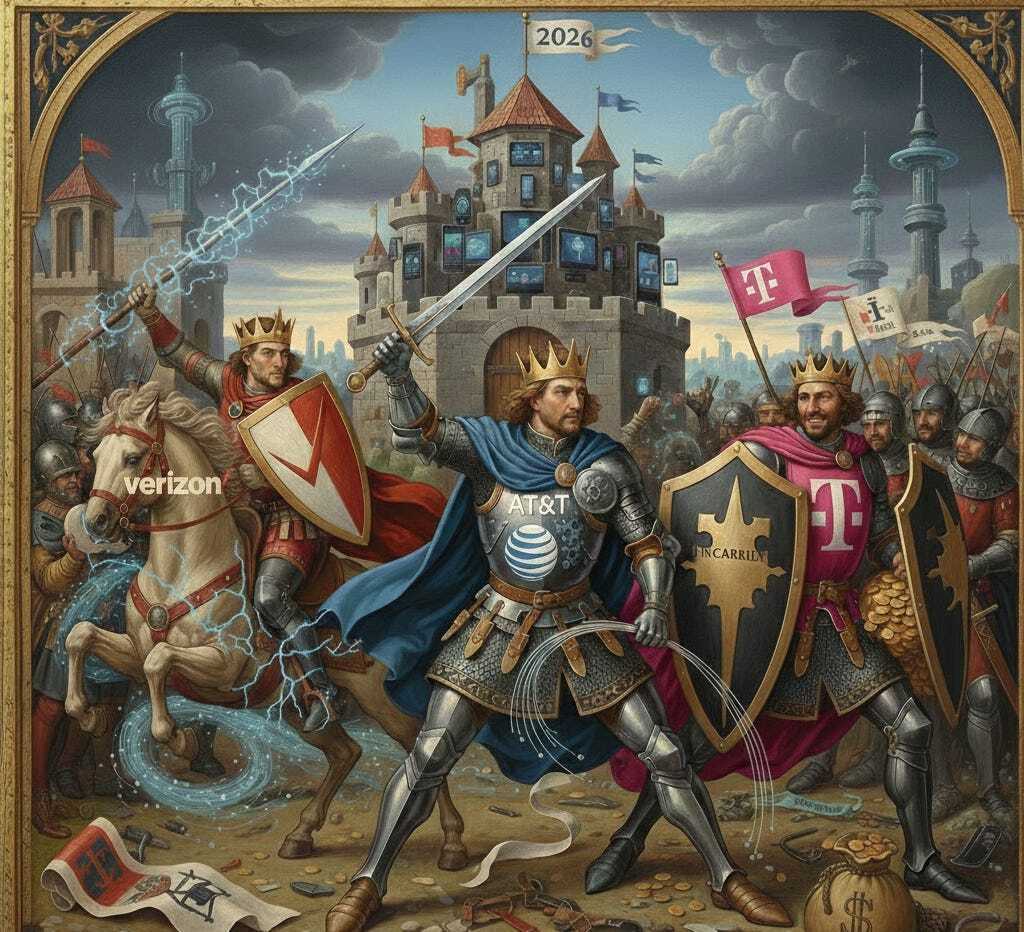
If you follow the US telecom market closely, there is little need for scripted drama elsewhere. In Q3, the three kings were still marching in different directions. Verizon was focused on yield discipline and cultural reset. AT&T was executing a fiber-led convergence model with almost mechanical consistency. T-Mobile was scaling fixed wireless and pushing growth into every open flank. Three doctrines, three tempos, three interpretations of where value would come from next.By Q4 and full year 2025, something shifted. The divergence narrowed.All three are now targeting the same asset: the American home. Not as a side product, but as the strategic control point of the account. Home broadband increases wallet share per household, reduces mobile churn through bundling, and raises switching costs by embedding connectivity deeper into daily life. Fiber passings, fixed wireless scale, and even satellite backstop coverage are now tools for the same objective: own the household relationship, and the rest of the revenue stack follows.
Share on

China Is Leaving America in the Dust on Clean Energy
insideclimatenews.org
Feb. 15, 2026, 11:46 a.m.
There are enormous geopolitical, economic and climate ramifications to the U.S. abandoning leadership on the energy transition. If you live in America, basically none of them are good.
Share on

Quantum Internet Is Near.Telcos Can Play Big.
sebastianbarros.substack.com
Feb. 14, 2026, 5:07 p.m.
Quantum internet is approaching faster than many expected. At the same time, the world still runs on classical encryption that quantum computers are projected to break within the next decade.Enterprises, governments, and consumer networks rely on cryptographic foundations that will not withstand a quantum computer with cryptographic relevance. Post-quantum standards were finalized in 2024, and regulators have begun setting migration timelines. The transition is an infrastructure upgrade that must start now.Telcos sit at the center of this shift.They move the world’s data and operate the physical networks where quantum security will be deployed. According to STL Partners, 35 operators are already active across 75 quantum-related projects, from pilots to commercial launches.Telco Momentum is building, and yet the risk is familiar: Telcos can either shape the quantum internet and own the trust layer, or remain passive transport providers while others capture the value. As quantum capabilities move closer to the network, the strategic choice cannot be deferred.
Share on

Arm wants a bigger slice of the chip business
www.economist.com
Feb. 13, 2026, 12:08 p.m.
In the semiconductor industry, Arm is everywhere and nowhere. Designs from the British-based, American-listed, Japanese-controlled firm sit in almost all the world’s smartphones and most other connected devices. Yet Arm does not sell a single chip. Customers license its designs, tweak them if they wish and produce the chips themselves (or have them made). Arm pockets an upfront licence fee and a slim per-chip royalty. The model has made it ubiquitous. More than 300bn chips built on its designs have been shipped—over 30bn of them last year alone.
Share on

China once stole foreign ideas. Now it wants to protect its own
www.economist.com
Feb. 13, 2026, 12:07 p.m.
China has long been a counterfeiting hub. Shoppers do not have to look far to find fake Nestlé food seasoning or imitation Nike sneakers. And brands are not the only form of intellectual property (ip) that is readily pilfered. Foreign multinationals that set up shop in the years after China opened its economy to the world often complained of their trade secrets being stolen. General Motors, an American carmaker, discovered in 2003 that a Chinese partner was rolling out a model strikingly similar to one of its own. Kawasaki, a Japanese industrial giant, and Siemens, a German one, believe their technology was nabbed to help build China’s extensive high-speed rail network.
Share on