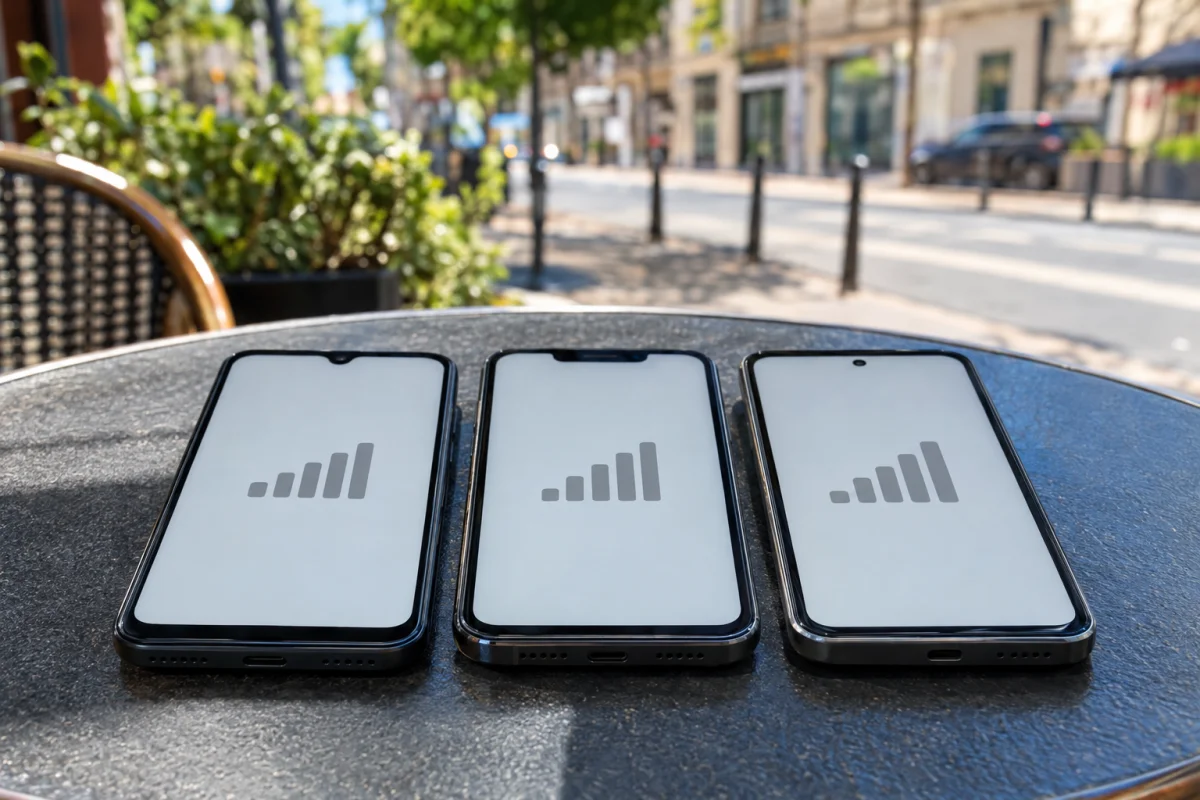
EN DIRECT. Panne géante Orange et Sosh : le réseau rétabli après près de dix heures, le point heure par heure
selectra.info
Oct. 24, 2026, 5:57 p.m.
La panne nationale du réseau mobile d'Orange et de Sosh a commencé vers 11 h 20 ce mercredi 21 octobre. Elle a pris fin dans la soirée : peu après 21 h, Orange a annoncé le retour des appels, des SMS et de l'internet mobile, après une panne de près de dix heures due, selon l'opérateur, à la défaillance d'un équipement de son cœur de réseau mobile. Appels, SMS et internet mobile ont été fortement perturbés partout en France, box 5G comprises. Cet article est mis à jour au fil de la journée, les dernières informations en premier.
Share on
Cyan Digital Security – Enabler for Seamless Security
www.cyansecurity.com
Oct. 24, 2026, 3:55 p.m.
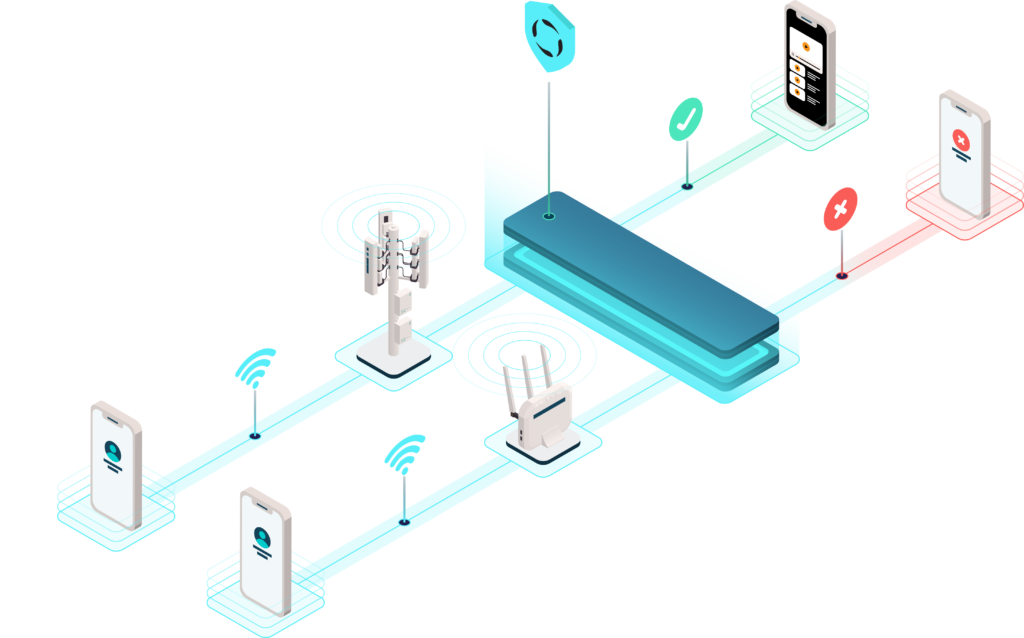
Cyan Digital Security delivers comprehensive cybersecurity solutions designed to protect organizations and end-users against evolving cyber threats including phishing, malware, and malicious content. Operating around the clock, the company provides scalable, white-labeled security offerings tailored for telecommunications, financial institutions, and other sectors. Their advanced threat detection algorithms continuously monitor network activity across all platforms and devices, automatically identifying and logging malicious instances. Cyan's solutions integrate seamlessly into existing infrastructure with minimal implementation time, available as both network-integrated services and endpoint-based software. Supporting B2B and B2C models, their AI-powered platform delivers real-time protection while maintaining ease of use through intuitive, branded interfaces, enabling organizations to safeguard their digital assets effectively.
Share on
How to Extend Your Wi-Fi Network: What Blocks Your Signal and How to Fix Dead Zones
www.earthlink.net
Oct. 24, 2026, 12:13 p.m.
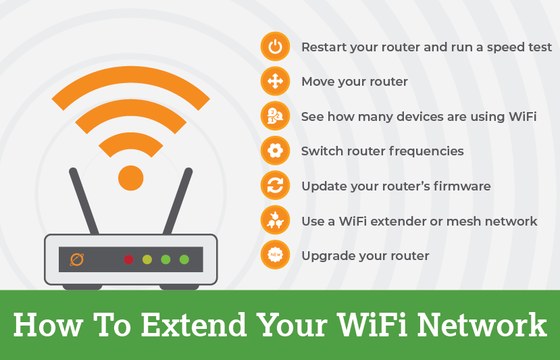
You can extend your Wi-Fi network by moving your router to a central, elevated spot, choosing the right frequency band for each device, and adding hardware like a Wi-Fi extender or mesh system in larger homes. Start with placement and settings, which are free, then upgrade hardware only if dead zones remain. If speeds are slow even over a wired connection, the bottleneck is your internet plan, not your Wi-Fi.
Mesh WiFi vs WiFi Extender: Which is Right For You?
ubifi.net
Oct. 24, 2026, 10:45 a.m.
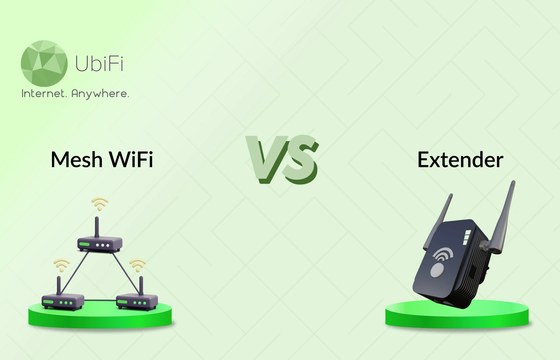
Mesh WiFi creates a single smart network for fast, seamless coverage across your entire home. It is slightly expensive but a more reliable option. WiFi extenders simply repeat signals and often reduce speed, especially in heavy use. It is an affordable option. Mesh WiFi is ideal for large homes, multiple devices, and uninterrupted roaming. It provides consistent speeds Extenders work best for small homes or one weak WiFi spot. It works well if the number of users is limited.
The 10 Myths about Starlink – A reality check for telecom operators, investors, and regulators
strandconsult.dk
Oct. 24, 2026, 4:02 a.m.
Strand Consult, a telecommunications research firm with three decades of industry expertise, challenges widespread claims about Low Earth Orbit (LEO) satellite technology, particularly Starlink, operated by SpaceX. While LEO satellites offer genuine potential for extending connectivity to underserved areas inaccessible to terrestrial networks, Strand Consult argues that ambitious assertions—such as LEO satellites eventually replacing conventional mobile networks—lack grounding in reality. The analysis introduces the concept of the "Cinderella constraint," highlighting a fundamental economic limitation: LEO satellites have operational lifespans of approximately five years and must continuously deorbit and burn up in the atmosphere. This necessitates perpetual replacement launches simply to maintain existing coverage and service quality, creating a rolling renewal model fundamentally different from traditional telecom infrastructure. Despite SpaceX's technological accomplishments and Starlink's scale, brand recognition, and cross-border operational advantages, this structural constraint represents a permanent feature of LEO economics. The research contextualizes Starlink as a standardized, vertically integrated platform competing against smaller LEO providers, while examining the realistic capabilities and limitations of satellite-based connectivity solutions for informed decision-making among industry stakeholders.
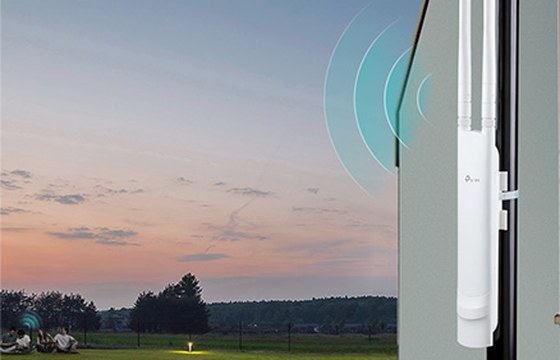
Waterproof Wi‑Fi Extenders vs Outdoor Mesh: How to Pick the Right Solution for Your Space
tech.dhgate.com
Oct. 24, 2026, 4:01 a.m.
Selecting outdoor Wi-Fi equipment requires matching hardware to both local weather conditions and network requirements for long-term reliability. This guide evaluates waterproof Wi-Fi extenders, mesh nodes, and long-range antenna options to help users choose appropriate gear for their properties. The critical factor is genuine IP rating certification rather than vague marketing claims like "weather-resistant." IP65, IP66, or IP67 designations indicate tested protection against dust and water exposure, with the first digit addressing solids and the second addressing water resistance. IP65 or IP66 ratings handle heavy rain and water jets, while IP67 provides additional protection against brief immersion during storms. For permanently mounted equipment on fence posts, masts, or shed sides without overhead protection, IP65 certification is non-negotiable. Equipment without published IP ratings may still offer strong range capabilities but should be positioned under protective covers such as eaves, patio roofs, or weatherproof boxes rather than exposed to direct elements. Understanding these technical distinctions enables informed purchasing decisions that prioritize durability and performance over single-product recommendations.

Outdoor Mesh WiFi: Extend Your Home Network Outside
www.netgear.com
Oct. 17, 2026, 4:02 a.m.
Effective outdoor mesh WiFi coverage requires strategic placement of routers and satellites rather than relying solely on hardware selection. The optimal approach involves positioning a satellite between the main router and the desired outdoor area, ideally in a room with a window or glass door facing the backyard, ensuring it maintains a strong connection to the primary router. Placement too far from the router compromises signal strength and outdoor performance. Material composition significantly impacts signal propagation, with brick, concrete, and stone walls causing greater attenuation than drywall or wooden structures. Additional obstacles including large furniture, mirrors, fish tanks, and metal cabinets further degrade coverage. Proper device positioning is critical—satellites should be kept away from floors, cabinets, and interference-generating devices. Most Orbi satellites are designed for indoor use and should be positioned near outdoor-facing windows or doors rather than placed outside, as indoor-rated equipment exposed to rain, sun, humidity, or freezing temperatures will sustain damage. Only purpose-built, outdoor-rated models should be deployed externally. These placement considerations are essential for maximizing WiFi coverage extension beyond the home.
Share on
IDLab - Next-generation wireless networks through two innovative research initiatives
www.uantwerpen.be
Oct. 17, 2026, 4:02 a.m.
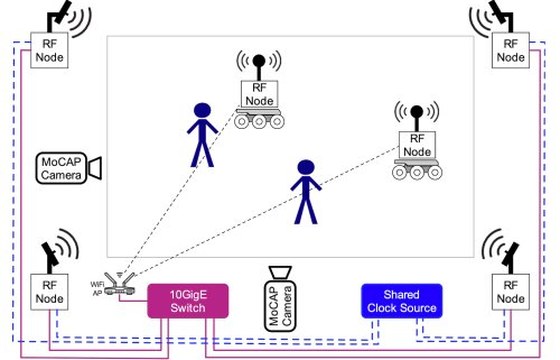
IDLab at the University of Antwerp is advancing next-generation wireless networks through two innovative research initiatives. The WiSeNet project, running from October 2026 to September 2030, addresses the integration of mobile terrestrial and satellite networks using AI-native radio resource management. Led by promoter Rafael Berkvens with co-promoters Rreze Halili and Thomas Janssen, the initiative focuses on collaborative sensing, dynamic spectrum allocation, predictive handover capabilities, and joint communication and sensing applications. By creating a 5D digital twin of the radiofrequency environment encompassing spatial, frequency, and temporal dimensions, WiSeNet enhances network efficiency and energy performance while maintaining low computational complexity. This approach supports diverse industries including autonomous driving and maritime operations, positioning networks for 6G readiness. Concurrently, the ORCAS project, launching September 2026 through August 2029, develops multi-sensor monitoring systems for underwater infrastructure protection. Led by Siegfried Mercelis and co-promoter Ali Anwar, ORCAS deploys unmanned surface vehicles and intelligent sensor networks to detect and respond to threats affecting submarine cables, pipelines, and offshore foundations, enabling proactive asset management through coordinated USV fleets.
Share on
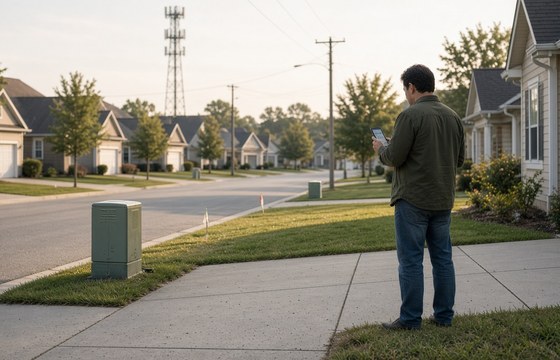
Why Are There Only a Few Internet Providers in My Area (2026)?
www.rsinc.com
Oct. 17, 2026, 4:01 a.m.
Across the United States, millions of residents face severely limited internet provider choices, with many areas served by only one or two companies such as Comcast or AT&T. According to the Federal Communications Commission's 2023 Broadband Progress Report, 42 million Americans live in areas where only a single ISP offers speeds of at least 25 Mbps download and 3 Mbps upload, forcing residents to accept whatever terms are offered or forgo modern connectivity entirely. This monopolistic and oligopolistic market structure directly results from decades of industry consolidation among large telecommunications and cable companies. The lack of competition has demonstrable consequences: a 2021 Institute for Local Self-Reliance study found that single-provider areas experience higher average prices and lower average speeds compared to regions with three or more providers. Without competitive pressure, ISPs lack incentive to upgrade aging infrastructure or introduce advanced technologies like gigabit fiber and symmetrical speeds. For consumers in a digital economy where connectivity drives employment, education, and entertainment, this limited choice translates into reduced speeds, elevated costs, constrained customer service, and stagnated innovation.
Share on

The Indispensable Spectrum: General Authorized Access to the Citizens Broadband Radio Service - New America
www.newamerica.org
Oct. 17, 2026, 4:01 a.m.
The Citizens Broadband Radio Service (CBRS) operates under a three-tier spectrum sharing framework managed by FCC-certified Spectrum Access Systems to protect U.S. Navy and incumbent users from interference. Commercial use divides into Priority Access Licenses (PALs)—seven 10-MHz channels auctioned per county in 2020 offering exclusive deployment rights—and General Authorized Access (GAA) channels providing 80 MHz of shared, unlicensed spectrum. Six years into full commercial operation, GAA has become the band's critical engine despite lacking interference guarantees. Real-time data reveals that over 1,000 entities have deployed approximately 446,000 active CBSDs (Citizens Broadband Radio Service Devices) as of July 2026, with 96.3 percent utilizing GAA channels. Remarkably, 63.2 percent of users rely exclusively on GAA spectrum, while 33.1 percent combine both GAA and PAL channels for enhanced capacity. PALs remain essential for interference-free operations in dense urban markets and mission-critical applications. The United States leads globally in private 5G and LTE network deployment, with at least seventy-five percent operating on CBRS spectrum, predominantly utilizing GAA channels, demonstrating GAA's indispensable role in enabling widespread spectrum access and innovation.
Share on
Meshtastic Off-Grid Messaging: Flood Routing, Airtime Budgets & FCC Limits · OpenRF Note
openrfnote.com
Oct. 17, 2026, 4:01 a.m.
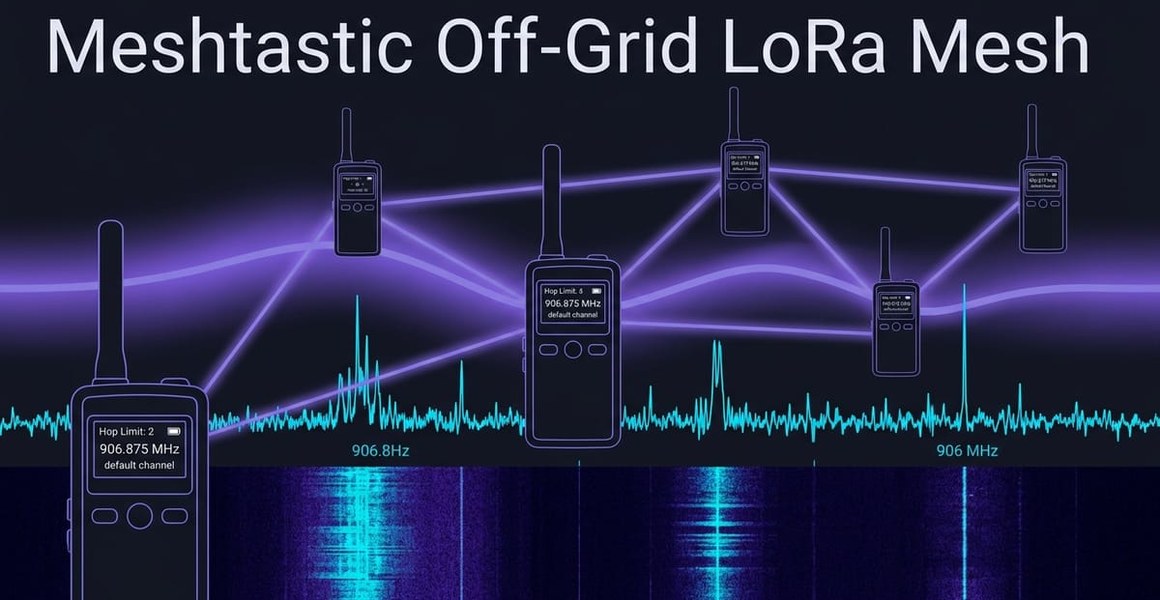
Meshtastic has emerged as the leading open-source platform for off-grid peer-to-peer communication, enabling users to send encrypted messages across miles using affordable ESP32 or nRF52 microcontroller boards paired with SX1262 LoRa transceivers. Unlike LoRaWAN's centralized gateway architecture, Meshtastic implements a true ad-hoc mesh topology where any node functions as a client, repeater, or router. The system uses managed flood routing for public broadcasts, while firmware version 2.6 introduced next-hop direct messaging to reduce network congestion. A critical distinction for network designers involves understanding that Meshtastic channels—users can configure up to eight on a single node—operate on shared physical RF frequency slots rather than separate frequencies. In North America's US915 band, the default public mesh uses Slot 20 centered at 906.875 MHz with SF11 spreading factor. Each channel shares identical airtime and spectrum resources, with privacy achieved through 256-bit AES encryption keys rather than frequency separation. Builders must grasp these architectural nuances to avoid exceeding FCC emissions limits and prevent local channel collapse in crowded shared spectrum.
Share on

Now featuring Wi-Fi 7: Our most powerful Wi-Fi, ever.
gfiber.com
Oct. 14, 2026, 1:02 p.m.
Google Fiber has introduced Wi-Fi 7 technology, marking a significant advancement in residential wireless connectivity. The new standard delivers wireless speeds up to four times faster than Wi-Fi 6, featuring expanded bandwidth and enhanced data flow capabilities. The system utilizes Multi-Link Operation (MLO) mesh technology to maintain multi-gigabit speeds throughout homes, including remote areas. Wi-Fi 7 incorporates intelligent traffic management to minimize latency and support multiple connected devices simultaneously. The technology comes standard with Google Fiber's Home, Edge, and Core products, offering users a unified network management experience through an intuitive application. The system provides guest network functionality for visitor access and supports the latest network encryption standards. While actual speeds depend on device capabilities, router proximity, and distance from access points, Wi-Fi 7 represents a substantial improvement over previous standards. This advancement enables users to maximize their fiber internet investment and supports the growing ecosystem of connected smart home devices, delivering near-zero lag performance even in bandwidth-intensive environments.
Share on
Musk Says ‘Certain Oligarchs’ Are Blocking Starlink In India
www.forbes.com
Oct. 10, 2026, 12:17 p.m.
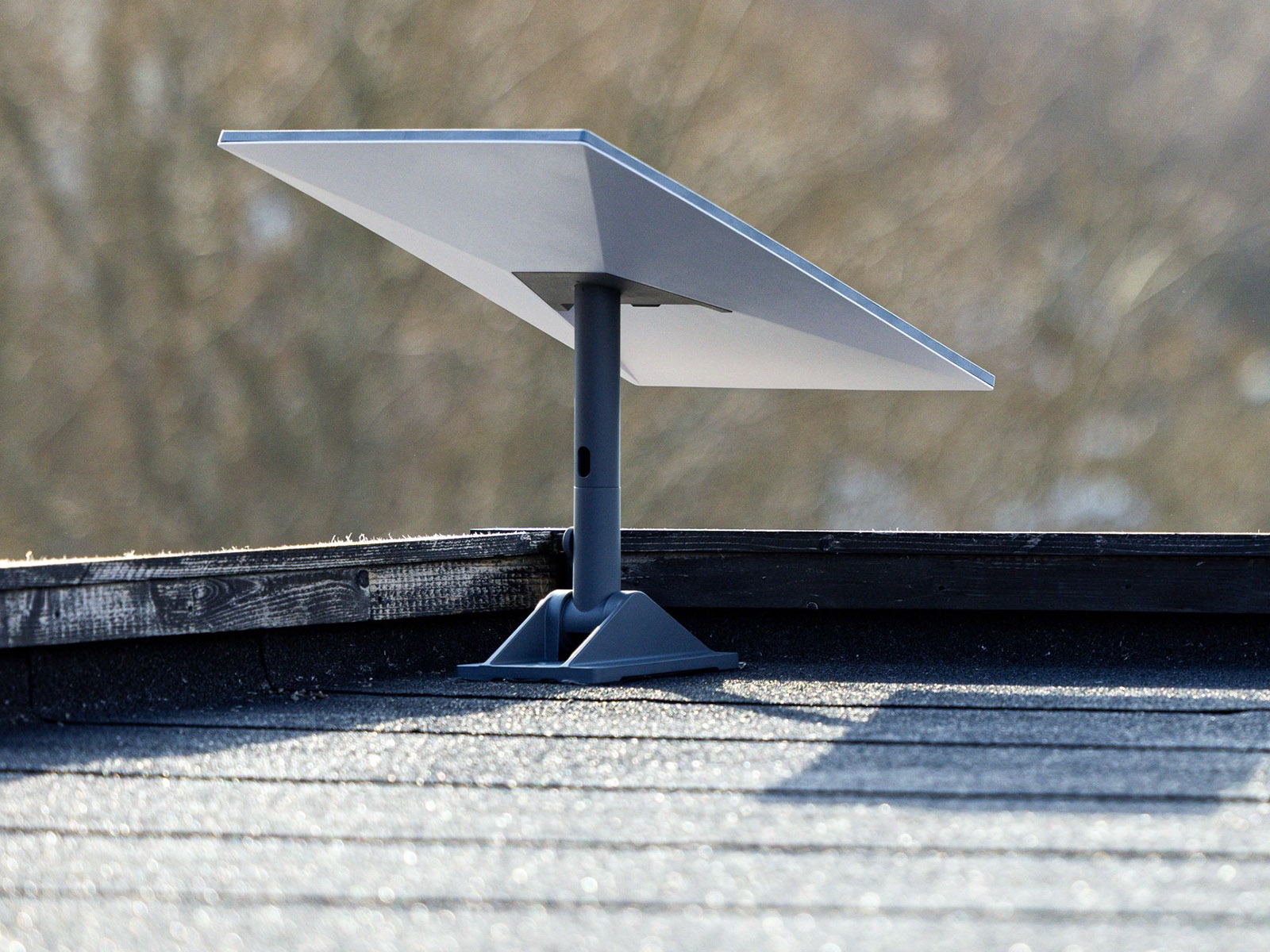
Starlink faces direct competition in India’s emerging satellite internet market from Eutelsat OneWeb (backed by billionaire Sunil Mittal’s Bharti Group) and Reliance Jio Space Technology, owned by India’s richest man, Mukesh Ambani.
Share on
How Mexico plans to expand telecom coverage in rural areas
www.bnamericas.com
Oct. 10, 2026, 12:14 p.m.
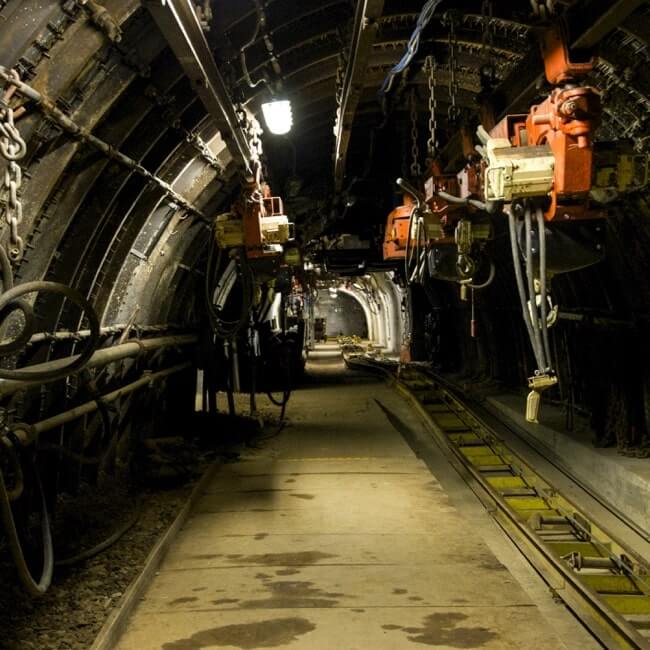
The scheme is mainly aimed at small internet and telephony service providers operating in rural, mountainous and remote areas, and is conceived as a complement to fiber, not a substitute. The spectrum could also be used to reinforce transmission routes in high-demand areas.
The 37-38.6 GHz range, in particular, belongs to the so-called millimeter waves (mmWave).
It is considered a premium band, intended for very high transmission capacity. It is used, for example, in 5G systems for high-speed private industrial networks, fixed wireless backhaul links, and space research and satellite services.
Not by chance, Mexico also announced a new project to launch a geostationary telecommunications satellite in the first quarter of 2030, with the aim of expanding internet access in remote communities and strengthening national security.
Share on

How to Get Free, Low-Income, or Affordable Internet in Summer 2026
www.rsinc.com
Oct. 10, 2026, 12:12 p.m.
Access to reliable internet now shapes access to opportunity. For job seekers, students, patients managing care online, or families staying in touch—fast, stable connectivity isn't optional; it's the foundation for full participation in modern life. Yet millions of low-income households continue to navigate glaring digital gaps, often forced to make trade-offs between a monthly internet bill and other basic needs.
When school lets out, the strain intensifies. Students lose access to classroom Wi-Fi, and families that rely on school networks face weeks—sometimes months—without consistent access to educational tools or essential digital services. That’s where summer internet initiatives step in. These programs don’t just bridge gaps; they power progress.
Share on

Turn Summer Downtime Into Real Cash: 5 Low-Effort Ways to Earn in 2026
lenme.com
Oct. 10, 2026, 12:11 p.m.
Summer has a funny math problem. More free time, more spending, same paycheck. But the earning side of the equation has never been easier to fix. Independent and supplemental work keeps growing, with surveys consistently showing that more than a third of US adults earn money outside a single traditional job. Here are five realistic ways to join them, ranked by effort, with honest numbers.
Share on

Boston’s Hub Express System (HEX), America’s First Meet-Me Street, Establishes Direct Interconnection to DE-CIX New York, Largest IX in the Northeast
www.de-cix.net
Oct. 10, 2026, 4:01 a.m.
DE-CIX, the world's leading carrier and data center-neutral Internet Exchange operator, has partnered with TOWARDEX to connect Boston's Hub Express System (HEX)—America's first Meet-Me Street—to DE-CIX's Internet Exchange in New York. HEX is a revolutionary subterranean telecom corridor enabling network operators, regional broadband providers, and data centers to interconnect fibers across Boston without reliance on traditional carrier hotels or monthly cross-connect fees. Through this Carrier Turnkey Connectivity partnership, participants gain direct access to DE-CIX's peering fabric, bypassing conventional interconnect bottlenecks and achieving ultra-low latency connectivity at significantly reduced costs. Organizations not directly linked to HEX can access the network through participating fiber providers offering dark fiber and Ethernet services. This strategic initiative represents a breakthrough for New England's internet infrastructure, marking the first time a major Tier 1 Internet Exchange has been deployed at a large-scale manhole system, democratizing network interconnection access and reducing barriers to entry for carriers and enterprises throughout the Northeast.
Haq's Musings: Digital Pakistan: Bridging the Geographic Digital Divide in the Country
www.riazhaq.com
Oct. 10, 2026, 4:01 a.m.
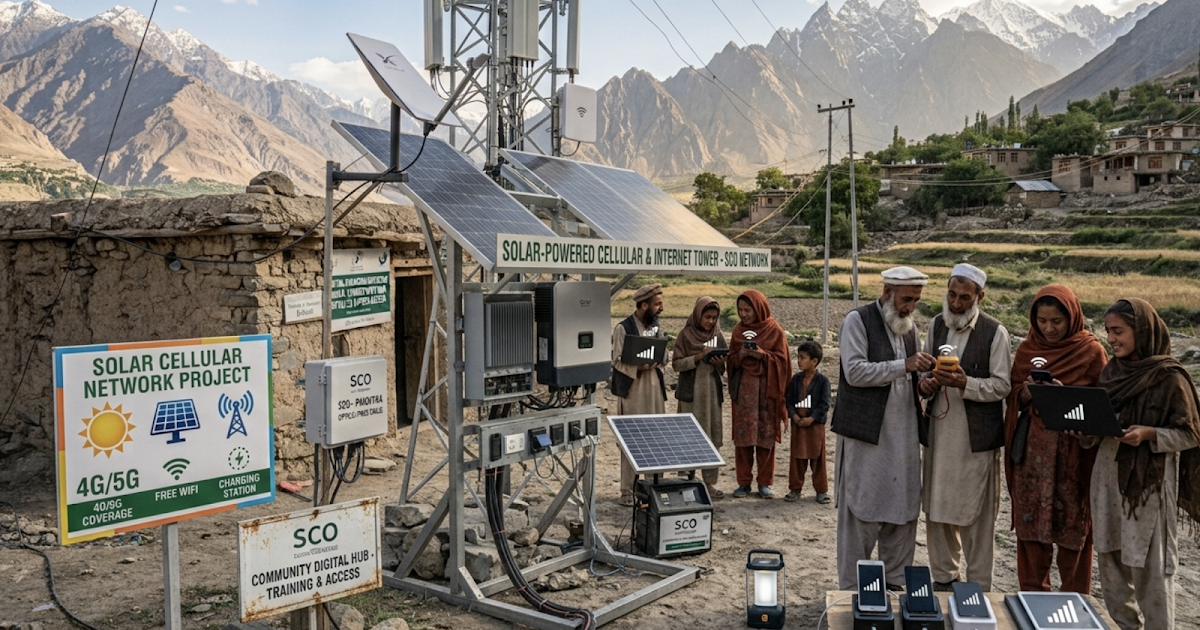
Pakistan faces a significant geographic digital divide, with rural mobile internet penetration at only 50% compared to 65% in urban areas, according to the GSMA's "State of Mobile Internet Connectivity 2026" report. To address this disparity, multiple connectivity solutions are being deployed. Solar-powered infrastructure, utilized by companies like Engro Enfrashare, provides reliable off-grid electricity for thousands of telecom towers across remote regions including Balochistan. The Pakistan Telecommunications Authority has recommended licensing multiple low-earth orbit satellite providers—including Starlink, OneWeb, Shanghai Spacecom Satellite Technology, and Amazon's Project Kuiper—to deliver broadband where conventional fiber installation is economically unfeasible. Additionally, Kacific Broadband Satellites has partnered locally to deliver up to 60 Mbps connectivity using the Paksat MM1 satellite's Ka-band spot beams across 20,000 sites in remote territories like Gilgit-Baltistan and Chitral. The Universal Service Fund, financed through levies on mobile carriers, has expanded connectivity to over 16.2 million people across 9,400 underserved communities. Recent approvals worth Rs 13 billion will fund fiber-optic projects covering 1,428 kilometers and broadband initiatives expected to connect approximately 5.5 million additional people across eleven districts.
Share on

Breaking Point to Blueprint: How American Communities Are Rebuilding Their Emergency Radio Networks from the Ground Up
www.intek-radios.com
Oct. 10, 2026, 4:01 a.m.
American communities have faced unprecedented stress on emergency communications infrastructure in recent years, from natural disasters to supply chain disruptions following the COVID-19 pandemic. When global logistics broke down starting in 2020, radio equipment manufacturers experienced component shortages that extended lead times for repeaters, transceivers, and related hardware from weeks to months, leaving jurisdictions reliant on single vendors or equipment sources vulnerable. However, communities that emerged with functional systems weren't necessarily those with the largest budgets, but rather those thinking strategically about resilience. Along the Gulf Coast, several counties partnered with local amateur radio clubs to build distributed, redundant, locally maintainable networks. This approach included establishing multiple repeater sites with diverse power sources—grid power, generators, and solar-charged batteries—so traffic routes through alternate sites when one fails. These forward-thinking jurisdictions also stockpiled regionally sourced critical spare parts including power supplies, connectors, coax, and backup transceivers rather than relying solely on distant just-in-time suppliers. These lessons demonstrate that emergency communications resilience depends less on budget size and more on redundancy, local sourcing, and human infrastructure investment.
Share on
State of the Mesh: September 2026
flyovermesh.org
Oct. 10, 2026, 4:01 a.m.
The Wichita Meshtastic community has experienced remarkable growth since its inception in April 2025, expanding from a single Reddit post to a robust mesh network of 724 nodes spanning over 100 miles. Seventeen months of community-driven development has produced 213 active nodes in the past month, with the longest confirmed direct link covering 26 miles. The network operates through approximately 2.3 average hops via 27 active relays, demonstrating redundancy and resilience. Community engagement proved essential, with members sharing resources and coordinating through a Discord server that grew to 248 members. The team developed custom bots—fl0v, HYDD, cbot, and HYDB—using modified open source software to test connectivity and generate coverage maps displayed at map.flyovermesh.org. Ten nodes handle the majority of traffic, with Buffalo and Panther One leading relay activity. Of nodes with neighbors, 71 percent can reach three or more other nodes, ensuring message routing around failures. This grassroots initiative demonstrates how decentralized mesh networks can provide reliable, independent communication infrastructure through collaborative community participation.
Share on