AI Factories Need More Than Compute: How Digital Twins Are Reshaping Operations and Workforce Training - iQ3Connect Gaussian Splatting for XR Training: Fast 3D Digitization with iQ3Connect
iq3connect.com
Sept. 12, 2026, 7:11 a.m.
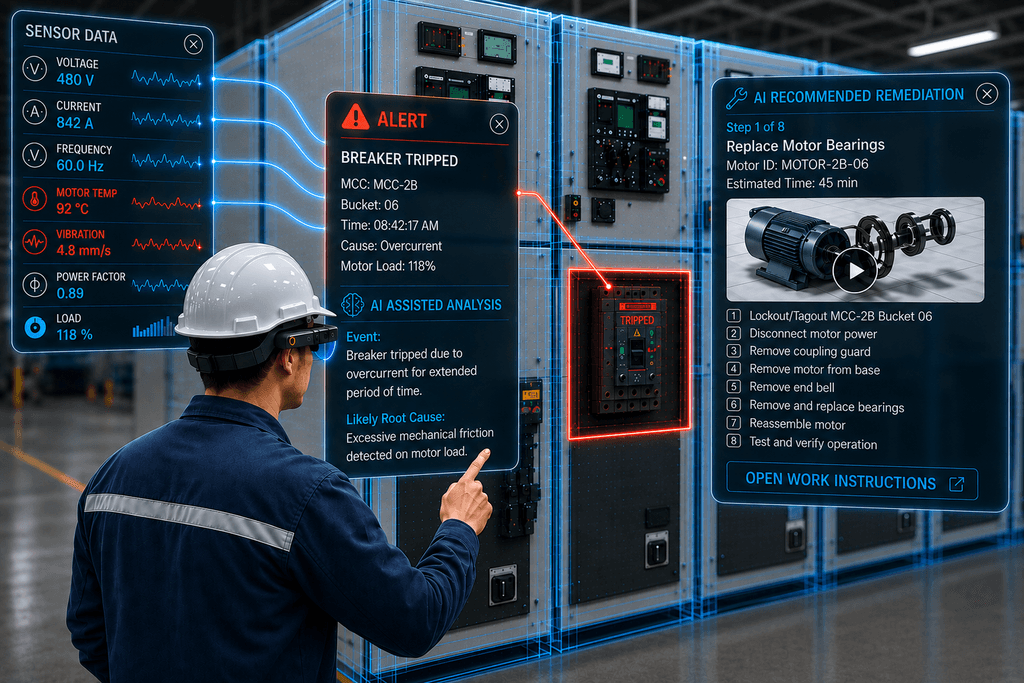
AI factories represent a transformative shift in industrial infrastructure, requiring unprecedented integration of computing, power, cooling, networking, and software systems. NVIDIA is leading this transformation with its Vera Rubin platform and DSX reference architecture, designed to support large-scale AI workloads. At GTC 2026, NVIDIA released the Vera Rubin DSX AI Factory reference design and made the Omniverse DSX Blueprint generally available, providing operators with both physical and digital-twin environments for comprehensive facility design and operations. While discussions typically emphasize hardware components like GPUs and liquid cooling systems, a critical gap exists in workforce preparation. As AI infrastructure grows increasingly complex, organizations must develop new training methodologies for personnel designing, operating, and maintaining these facilities. Digital twins and immersive learning emerge as essential solutions, offering simulation, collaboration, and operational knowledge foundations beyond mere digital representation. Unlike traditional data centers serving diverse computing needs, AI factories are purpose-built for accelerated computing, processing massive data volumes to produce AI models, inference, and tokens at scale. This specialized workforce readiness becomes paramount to operational success.
Share on

AgentHands: Generating interactive hand gestures for spatially grounded agent conversations in XR
research.google
Sept. 12, 2026, 7:11 a.m.
AgentHands is an LLM-powered extended reality prototype developed by Google researchers Xun Qian and Ruofei Du that enables conversational AI agents to generate synchronized, expressive hand gestures for spatially grounded guidance in physical environments. Published at CHI 2026, the system addresses a critical gap in immersive platforms like Android XR by moving beyond traditional flat UI overlays to create embodied, spatially aware dialogue. The prototype leverages the natural human communication pattern where hand gestures accompany speech to describe shapes, mimic actions, and emphasize points. Following formative studies with Google's XR and human-computer interaction experts, the researchers developed a multi-dimensional taxonomy defining legible virtual hand communication across six dimensions: handedness, gesture, spatiality, temporal dynamics, interactivity, and visual effects. AgentHands maps the reasoning capabilities of large language models into precise, real-time physical motions synchronized with the agent's voice and the user's XR environment. This innovation bridges what researchers call the "mental mapping gap," transforming abstract verbal instructions into intuitive physical demonstrations that enhance user engagement during collaborative physical tasks and advance AI assistance from simple text interfaces to truly embodied spatial companions.
Share on

Real-Time Remote Assistance & Expert Guidance Systems â HOTUS
www.hotusprojector.com
Sept. 12, 2026, 7:10 a.m.
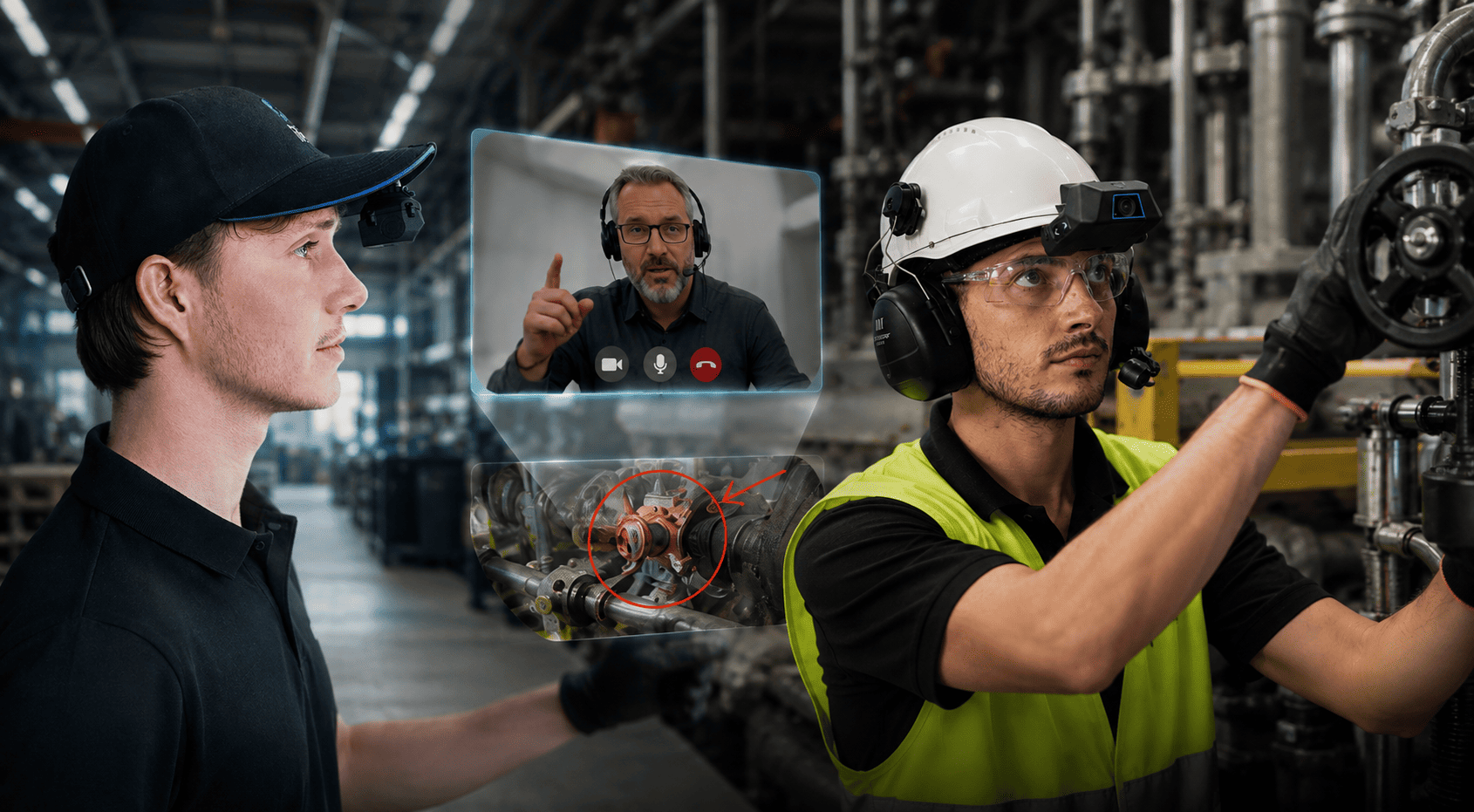
HOTUS addresses a critical operational challenge in industrial settings where equipment failures at remote overseas facilities create substantial financial losses during extended repair delays. The company has developed remote assistance solutions that enable real-time, secure audio-visual communication between on-site technicians and back-office experts. This technology allows senior engineers to visually inspect equipment through the technician's perspective and provide step-by-step guidance for repairs without requiring costly on-site travel. By facilitating immediate expert intervention regardless of geographic location, HOTUS reduces downtime and associated financial impact. The platform is particularly valuable for managing rare or complex faults that demand specialized knowledge. Additionally, HOTUS offers augmented reality-assisted inspection solutions tailored for wearable devices, further enhancing maintenance workflows and technician efficiency. These innovations represent a significant advancement in distributed technical support, combining telecommunications infrastructure with expert knowledge to optimize industrial equipment maintenance operations globally.
Share on
Wearable AR Hands-Free: The Guide to Smart Glasses for Industrial Work
kiber.tech
Sept. 12, 2026, 7:10 a.m.
Wearable augmented reality smart glasses are transforming industrial operations by eliminating the need for technicians to hold devices during tasks, fundamentally changing how work is performed in field service, maintenance, and inspection roles. This hands-free capability spans critical sectors including manufacturing, energy, and construction, enabling significant operational improvements. A particularly valuable application involves remote expert guidance, where specialists can observe technicians' point-of-view feeds in real time to direct repairs, validate procedural steps, and approve operations without requiring on-site presence. This capability addresses a universal need across diverse industries, as demonstrated through Kiber's work with clients in oil and gas, manufacturing, and renewables sectors. The technology represents a significant advancement in workplace efficiency and safety by combining remote expertise with field-level execution, reducing travel costs and downtime while improving accuracy and decision-making in critical industrial processes.
Share on
[PDF] Constructing the haptic interaction loop for immersive VR/AR systems
materialsfutures.org
Sept. 12, 2026, 7:10 a.m.
# Professional Summary
This article addresses the critical challenge of developing effective haptic interaction loops for immersive virtual and augmented reality systems. The haptic interaction loop represents the fundamental feedback mechanism that enables users to perceive tactile sensations within immersive environments, bridging the gap between digital interactions and physical sensation. The research examines the architectural components and technical requirements necessary to construct robust haptic feedback systems that enhance user immersion and presence in VR/AR applications. The work explores integration of haptic devices with real-time tracking systems, motion capture technology, and sensory feedback algorithms to create seamless interaction experiences. Key considerations include latency reduction, force feedback accuracy, and synchronization between visual and tactile stimuli. This research matters significantly for advancing extended reality technologies across enterprise training, medical simulation, remote manipulation, and entertainment sectors, where realistic haptic engagement substantially improves user performance, engagement, and training efficacy.
Share on
NeSt-VR: An Adaptive Bitrate Algorithm for Wireless Virtual Reality Streaming
arxiv.org
Sept. 4, 2026, 6:18 p.m.
Interactive Virtual Reality streaming over wireless networks presents significant technical challenges, requiring both high frame rates and minimal motion-to-photon latency despite fluctuating bandwidth and multi-user interference. This paper introduces NeSt-VR, a Network-aware Step-wise Adaptive BitRate algorithm designed to optimize VR streaming performance. The system employs application-level frame-delivery and frame-delay feedback mechanisms to adjust encoder bitrate in discrete steps, minimizing abrupt oscillations while maintaining satisfactory user experience. Researchers evaluated NeSt-VR through Wi-Fi experiments across single and multi-user scenarios, comparing performance against leading baseline controllers including GCC, NADA, and EVeREst-Intra, while testing resilience to common Wi-Fi challenges such as co-channel interference and capacity fluctuations. Results demonstrate that NeSt-VR effectively manages bandwidth variations, sustains frame delivery reliability, and maintains low latency while outperforming comparable controllers. Given the proliferation of consumer XR head-mounted displays from manufacturers like HTC, Valve, and Meta, and the shift toward wireless remote rendering solutions leveraging cloud and edge computing, efficient adaptive bitrate control is essential for delivering seamless mobile XR experiences. Wi-Fi's widespread infrastructure makes this advancement particularly significant for practical XR deployment.
Share on
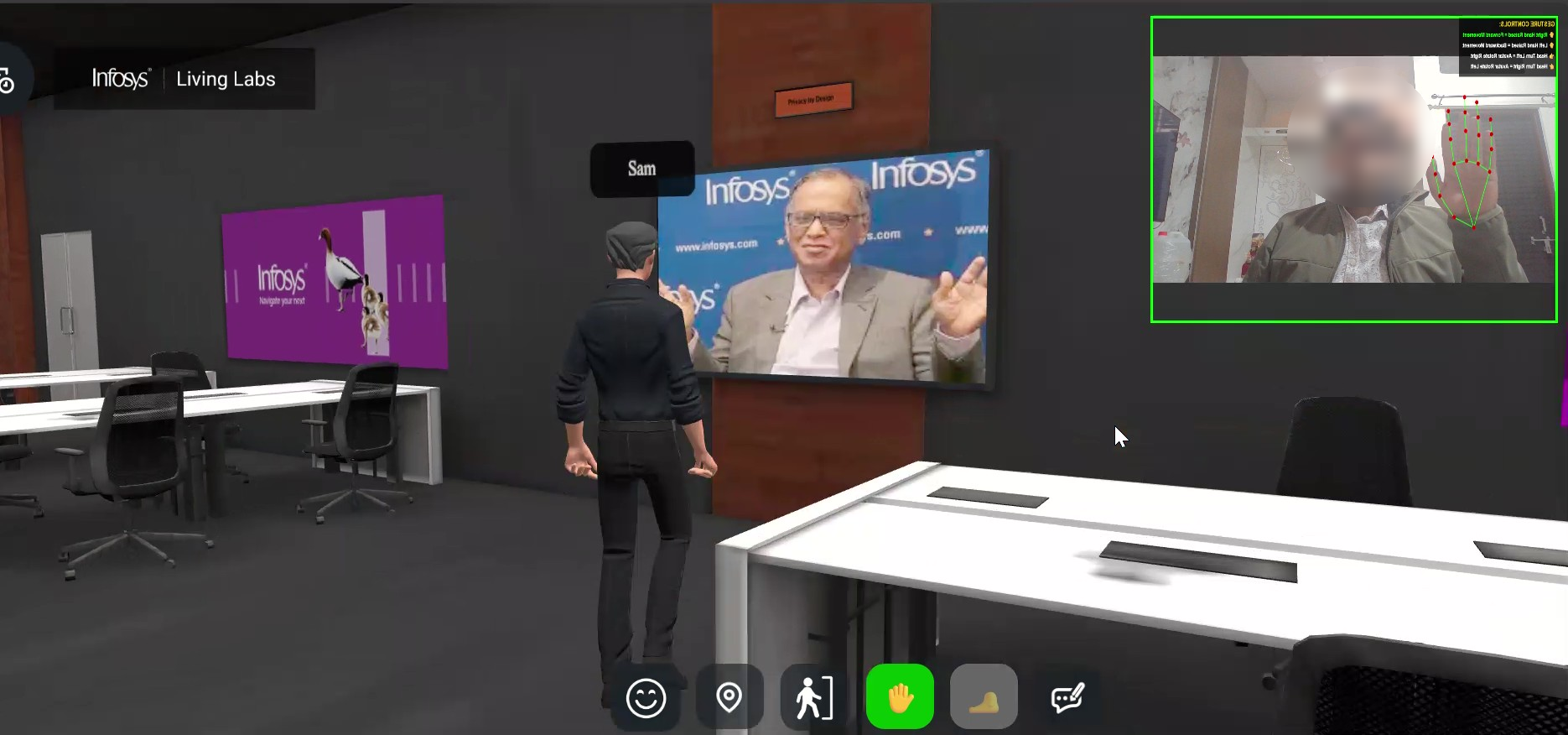
A Browser-Based Gesture-Driven Avatar Interaction Framework for Metaverse Onboarding Environments
arxiv.org
Sept. 4, 2026, 6:18 p.m.
This paper presents a gesture-driven interaction system for browser-based metaverse environments that eliminates the need for controllers or keyboards. The system integrates Google MediaPipe, a real-time gesture recognition framework, with two locomotion techniques—hand-raise navigation and in-place walking—enabling users to explore virtual rooms and interact with video, document, and quiz content through natural hand, arm, and head gestures. The approach prioritizes intuitive, controller-free interaction to enhance immersion and lower barriers for first-time users by leveraging how people naturally communicate. Evaluated through an internal onboarding session with five participants, the research documents the integration, deployment, and practical trade-offs of combining these techniques into a lightweight, web-deployable system. The contribution addresses a critical challenge in metaverse design: making avatar interaction feel natural and immersive rather than device-dependent, advancing the field beyond traditional keyboard and controller-based interfaces toward more engaging user experiences.
Share on
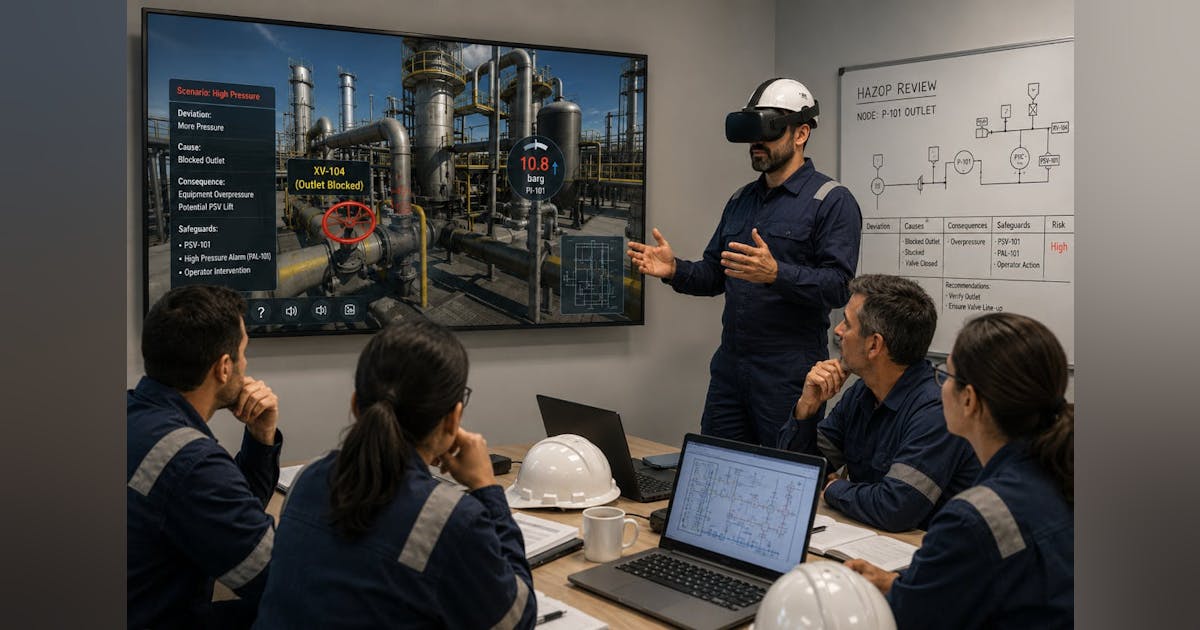
How VR, Digital Twins and AI Can strengthen industrial training and process safety
www.processingmagazine.com
Sept. 4, 2026, 6:17 p.m.
Process industries require personnel to make sound decisions in complex, high-consequence environments, yet traditional training methods like classroom instruction and two-dimensional drawings often fail to convey critical spatial and temporal information about equipment behavior and plant layout. Virtual reality, digital twins, and artificial intelligence are transforming industrial training by creating immersive, practical preparation tools that help operators, maintenance teams, engineers, and supervisors better understand process areas, equipment relationships, abnormal situations, and emergency procedures before entering the field. While these technologies are not intended to replace engineering judgment or established safety management systems, they effectively bridge the gap between theoretical knowledge and operational readiness by helping learners mentally connect information from multiple sources—including piping and instrumentation diagrams, operating procedures, equipment data sheets, and alarm philosophies—to the physical plant. This integration is critical for process safety compliance under OSHA's Process Safety Management standard, as safe operation demands both comprehensive knowledge and situational awareness. By making complex process information more comprehensible and rehearsable, immersive technologies enhance personnel capability to recognize equipment in the field, appreciate hazards and access challenges, and visualize relationships between process components, ultimately strengthening workplace safety and operational effectiveness.
Share on

AR Maintenance for Power Plants: Remote Expert Assistance
ifactoryapp.com
Sept. 4, 2026, 6:17 p.m.
Unplanned downtime at power plants often stems from the distance between on-site technicians and remote specialists who can diagnose equipment failures. When critical components like boiler feed pumps or turbines malfunction, plants traditionally rely on phone-based troubleshooting or wait hours for specialist travel, compounding repair costs and lost generation capacity. Augmented reality technology now closes this gap by enabling remote experts to see exactly what on-site technicians observe, annotate equipment directly onto live video feeds, and guide repairs in real time. Rather than describing gauges and valve positions over the phone or interpreting blurry photos, AR eliminates translation errors that delay resolution. Power plants increasingly deploy AR-guided remote assistance as core operating infrastructure, allowing specialists to instruct any technician through complex repairs as if physically present. This approach dramatically reduces the cost per failure by replacing lengthy escalation cycles and specialist travel with immediate visual collaboration, ensuring generating units return to service faster and maintenance schedules stay on track.
Share on
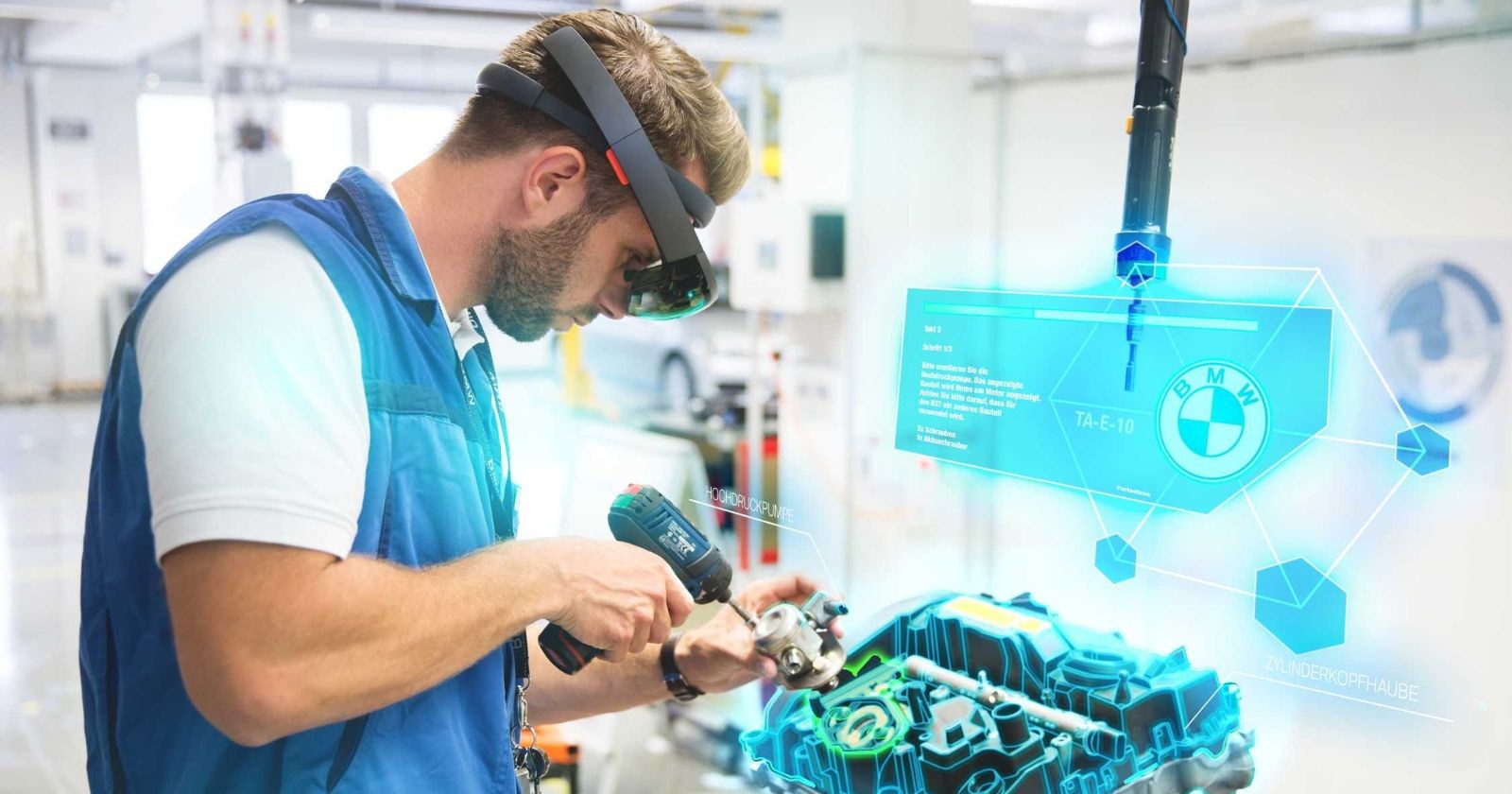
How 3D Product Visualization Increases E-commerce Conversions
www.advertflair.com
Aug. 15, 2026, 7:10 a.m.
E-commerce businesses face a persistent challenge: customers hesitate to purchase online because they cannot physically inspect products before buying. While static images and photography dominate most online stores, they limit customer interaction and create friction in the buying process. Three-dimensional product visualization addresses this gap by creating highly interactive digital replicas with precise dimensions, materials, and lighting behavior. This technology enables customers to rotate products, zoom in on details, and examine textures from their homes, simulating an in-store experience. For luxury fashion and premium retail brands, 3D visualization has evolved from experimental technology into a strategic business tool. The approach directly impacts conversion rates by reducing uncertainty, the primary barrier to purchase. When customers actively explore products rather than passively view static images, they spend more time on product display pages and develop greater confidence in their purchasing decisions. This increased engagement and perceived control over product inspection translates to measurable improvements in sales, reduced return rates, and strengthened customer trust in luxury and premium retail sectors.
Share on
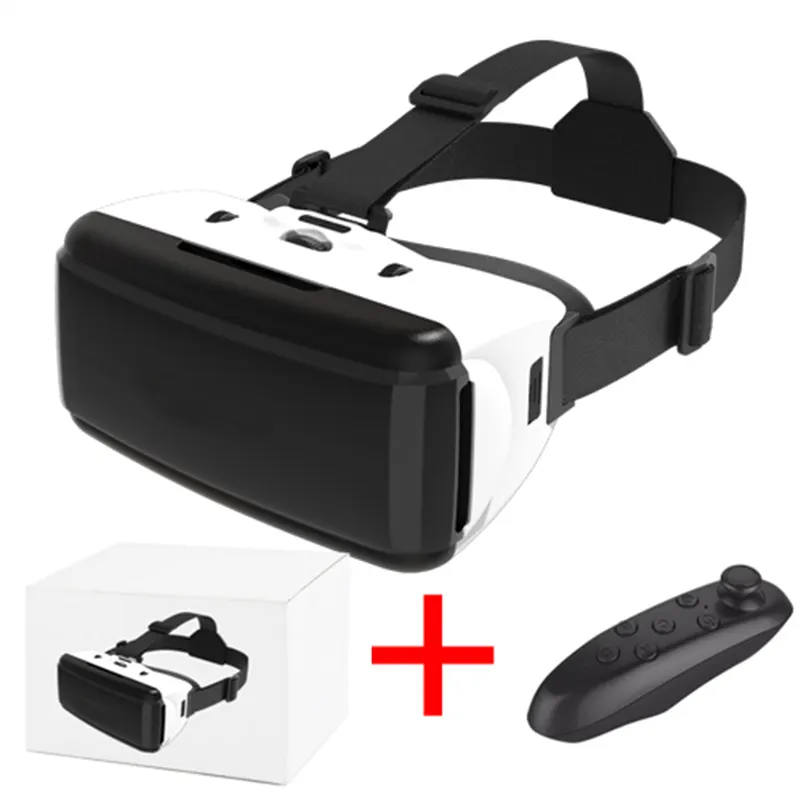
Newest VR Headset 2025 Guide: How to Choose Wisely
electronics.alibaba.com
Aug. 15, 2026, 7:10 a.m.
The 2025 VR headset market represents a structural shift from gaming-focused devices toward spatial computing platforms for productivity, design, and remote collaboration. For typical consumers, the Samsung and Google Android XR (Project Moohan) at $1,299 offers the strongest balance of performance and usability, prioritizing specifications like weight under 200 grams, native 4K+ resolution per eye, and standalone operation. For enterprise applications requiring precision and content creation fidelity, the Sony SRH-S1 at $4,750 delivers advanced professional capabilities. Google Trends data shows search interest peaked at 100 in December 2025, the highest in five years, reflecting genuine market momentum rather than seasonal interest. This growth is driven by three factors: hardware maturity with 4K OLED microdisplays now standard, software convergence with native XR export pipelines from Unity, Unreal, and Adobe, and measurable workflow adoption across architecture, medical simulation, and automotive sectors. The market expanded 39.2 percent in unit shipments annually. Current 2025 models integrate high-fidelity microdisplays, AI-accelerated passthrough, and modular input systems, serving creative professionals, remote engineers, educators, and serious gamers seeking sustained comfort during extended use.
Share on
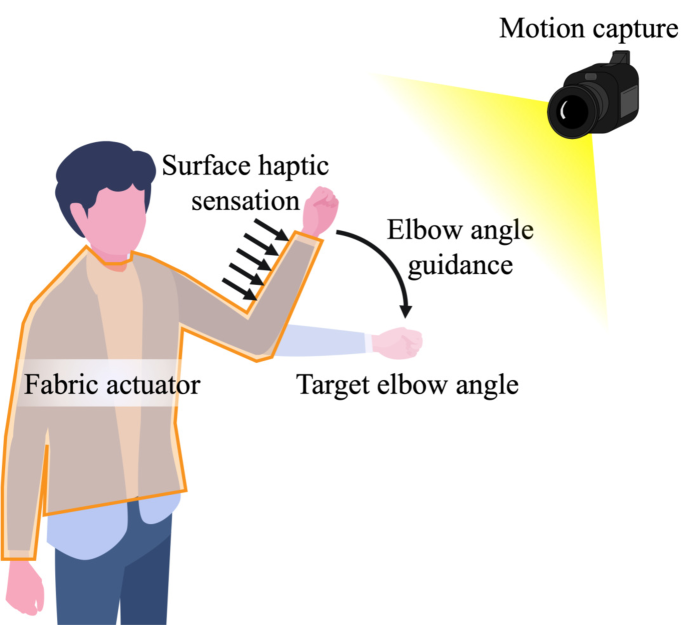
Elbow Angle Guidance System Based on Surface Haptic Sensations Elicited by Lightweight Wearable Fabric Actuator
arxiv.org
Aug. 15, 2026, 7:09 a.m.
Researchers have developed an innovative elbow angle guidance system utilizing a lightweight wearable fabric actuator to address limitations in existing haptic devices. The proposed system integrates McKibben-type artificial muscles—pneumatically driven actuators—into fabric material, creating a non-intrusive haptic device that delivers intuitive surface sensations without hindering natural movement. Unlike conventional wearable haptic devices that often interfere with wearer activities and fail to adapt to natural posture, this fabric-based actuator adjusts sensory feedback in real time to guide elbow extension and flexion intuitively. The system employs optical motion capture technology to measure the user's elbow angle continuously, then modulates haptic sensation intensity based on the difference between target and actual positions. Human participant experiments validated the system's accuracy and effectiveness. This advancement holds significant implications for rehabilitation applications and virtual reality teleoperation, where intuitive haptic feedback without physical interference is essential, addressing long-standing requirements for wearable upper-limb devices that neither fatigue users nor disrupt natural motion patterns.
Share on
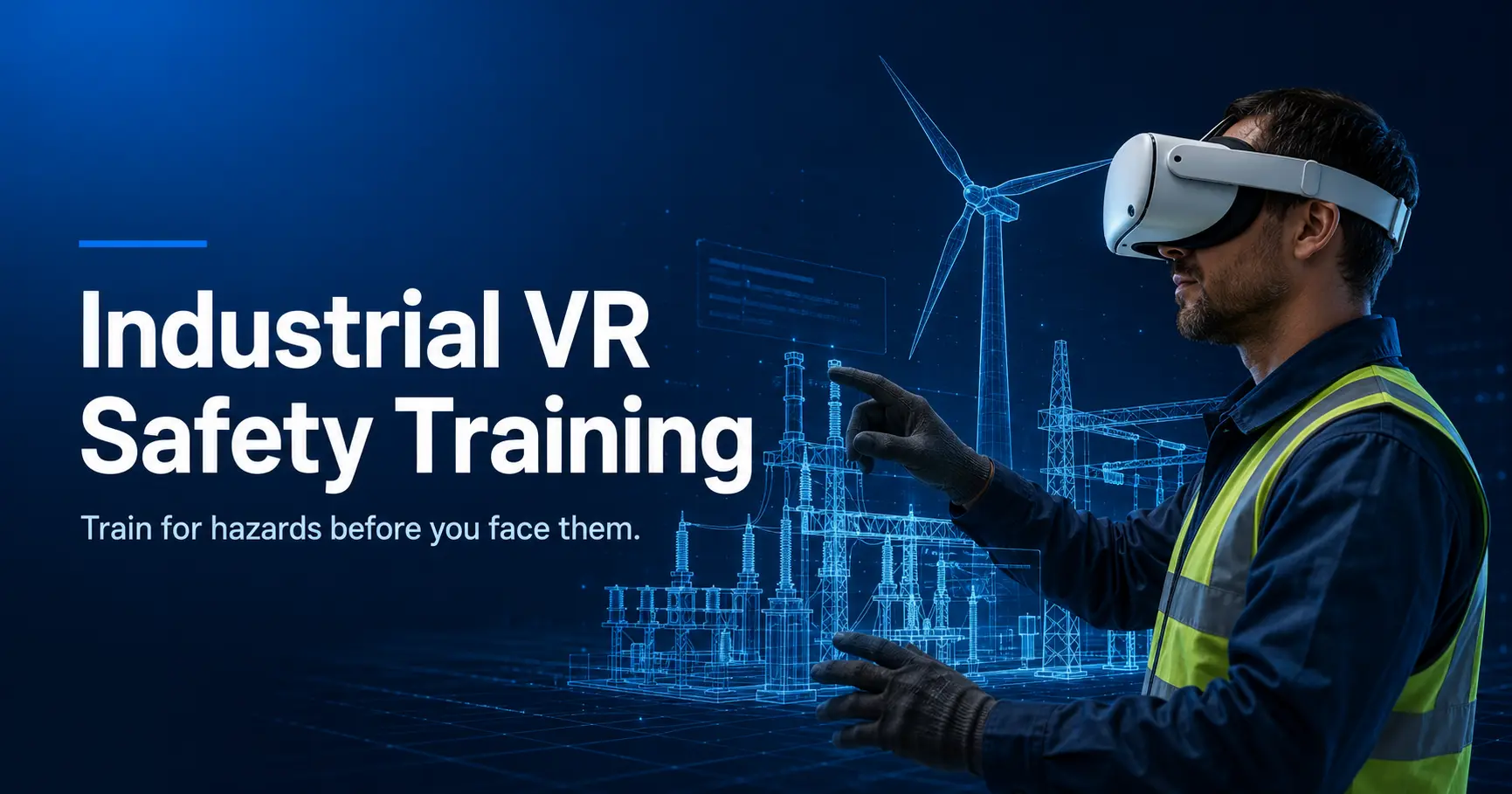
Industrial VR Safety Training That Prepares Workers for Hazards Before They Face Them
www.vrvisiongroup.com
Aug. 15, 2026, 7:09 a.m.
Industrial VR safety training leverages immersive virtual reality simulations to teach workers hazard recognition, safety procedures, and emergency response using engineering-grade digital twins of actual facilities. VR Vision has pioneered this approach over ten years, training more than 100,000 workers across energy, utilities, and manufacturing sectors for major enterprises including Toyota, Siemens Gamesa, Enel, and Hydro One. The company's solutions enable workers to practice high-risk tasks such as electrical switching, confined space entry, and lockout/tagout procedures with zero physical danger, achieving four times faster training completion rates. A notable example is Enel, which realized $5 million in annual training savings through VR implementation. This approach fills a critical gap in traditional safety education: workers who pass classroom assessments often freeze or improvise when facing live hazards. With 5,070 U.S. workplace fatalities in 2024 and persistent OSHA violations in fall protection and lockout/tagout procedures, immersive VR training provides documented proof of worker competency and unlimited safe repetitions of dangerous scenarios before real-world exposure, complementing rather than replacing hands-on field training.
Share on
Meta XR Interaction SDK Essentials (UPM)
developers.meta.com
Aug. 15, 2026, 7:08 a.m.
Meta has released version 205.0 of its XR Interaction SDK Essentials, a lightweight, platform-independent package available through Unity Package Manager. This core toolkit provides foundational interaction building blocks including grab, poke, ray, and locomotion interactions, along with hand pose detection and visual indicators, without requiring dependencies on the Meta XR Core SDK. The latest update introduces a new public API for Quick Actions that enhances discoverability for AI agents configuring interactions. Key improvements include enhanced wrist aiming through the improved Hand Pointer Pose system, which simplifies interactor hierarchy, and a new customizable Pinch grab API now default for OpenXR hand data sources, allowing per-finger adjustment of select and unselect ranges. The update addresses multiple technical issues, including crashes when destroying hovered Grab Interactables and added support for Unity's dual input system while maintaining legacy compatibility. These enhancements enable developers to build more flexible and robust XR experiences across multiple platforms with reduced complexity.
Share on
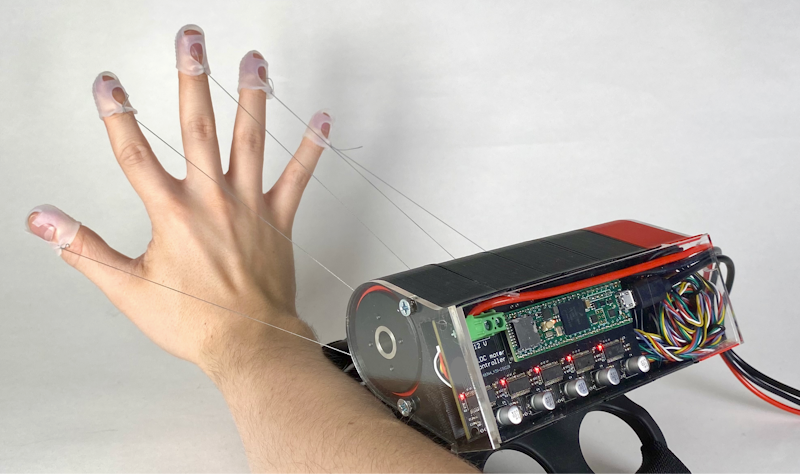
Reel Feel – Haptic Feedback for Virtual Reality
www.pjrc.com
Aug. 8, 2026, 7:08 a.m.
Researchers Nathan DeVrio and Chris Harrison from Carnegie Mellon University's Future Interfaces Group have developed Reel Feel, a cost-effective haptic feedback device addressing a major limitation in virtual reality—the lack of tactile sensation. The system ingeniously shifts the weight burden away from hands and fingers by mounting the primary hardware on the shoulder, with reels of string extending to each finger via a silicone cap to simulate contact with virtual objects. This approach enables object-based haptic feedback for both rigid and compliant surfaces, creating more immersive interactions. The prototype, built using a Teensy 4.1 microcontroller, costs approximately $240 in parts, with brushless DC motors comprising 83 percent of the expense. The researchers estimate production costs could drop below $100 with mass manufacturing, making haptic feedback accessible to mainstream VR users. This solution addresses a critical user complaint that current VR systems fail to replicate physical contact, potentially enhancing immersion and user engagement across gaming, training, and simulation applications.
Share on
Smart Glasses App Development Services
prakashinfotech.com
Aug. 8, 2026, 7:08 a.m.
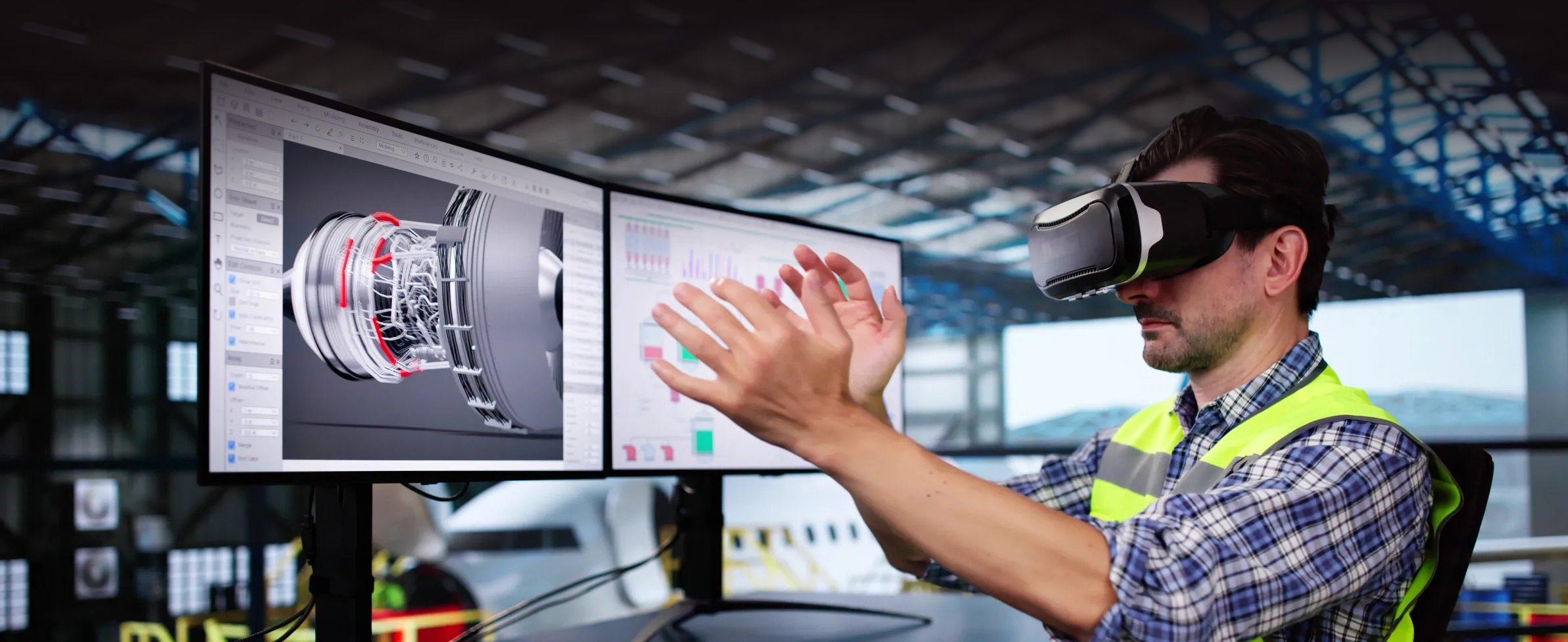
PSSPL offers comprehensive smart glasses app development services for AR wearables including Xreal, Snapchat Spectacles, and Meta AI glasses. The company specializes in creating AI-powered applications designed for hands-free, voice-activated interactions that enhance field tasks like maintenance inspections, defect recording, and checklist management without disrupting workflow. Leveraging technologies such as NRSDK for spatial computing, Lens Studio for AR experiences, and custom ML algorithms for computer vision, PSSPL builds applications emphasizing brief, contextual interactions optimized for attention, movement, and power efficiency. The platform integrates with existing databases and backend systems through two-way synchronization, enabling real-time data updates via voice dictation using OpenAI Whisper and remote supervision through live broadcast capabilities. With over 25 years of engineering experience, 500+ projects delivered, and 90% client retention, PSSPL positions smart glasses applications as fundamentally different from mobile apps, requiring specialized design principles that respect user safety and cognitive load while delivering critical information at precise moments during hands-on activities.
Share on
Reference-Based Manipulation: A Framework and Pipeline for Multimodal Spatial Reasoning
arxiv.org
Aug. 8, 2026, 7:07 a.m.
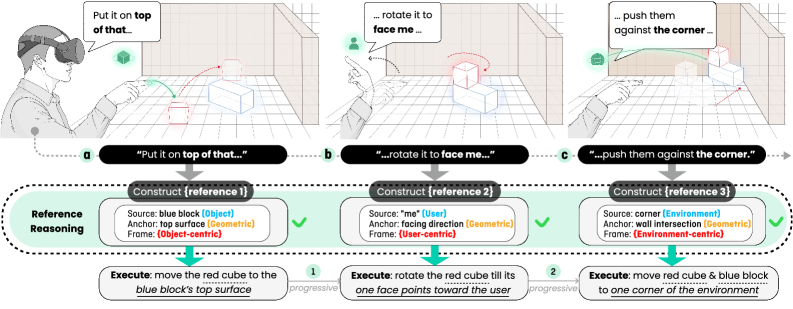
Researchers have developed a novel framework and pipeline for enabling intuitive spatial object manipulation in virtual reality through multimodal interaction. The study leveraged spatial cognition theories and conducted a Wizard-of-Oz study using a custom toolkit to observe how users naturally combine speech and gesture to communicate spatial intent in immersive environments. The team formalized a Reference-based Manipulation framework that decomposes spatial references into three core components—Source, Anchor, and Frame—characterizing their compositional strategies and explicitness levels. They validated this framework by implementing an LLM-based pipeline with interaction techniques and conducted preliminary technical evaluation. The work addresses a critical limitation of traditional VR interfaces that require users to translate intuitive spatial thinking into coordinate axes and numerical parameters, causing learning curves and physical fatigue. By enabling users to communicate spatial manipulation naturally through multimodal input, this research advances human-computer interaction in immersive platforms, making 3D object manipulation more accessible and aligned with how humans inherently conceptualize and communicate spatial relationships.
Share on
AR Try-On and Spatial Commerce: The ROI Case for Retail in 2026
framesixty.com
Aug. 8, 2026, 7:07 a.m.
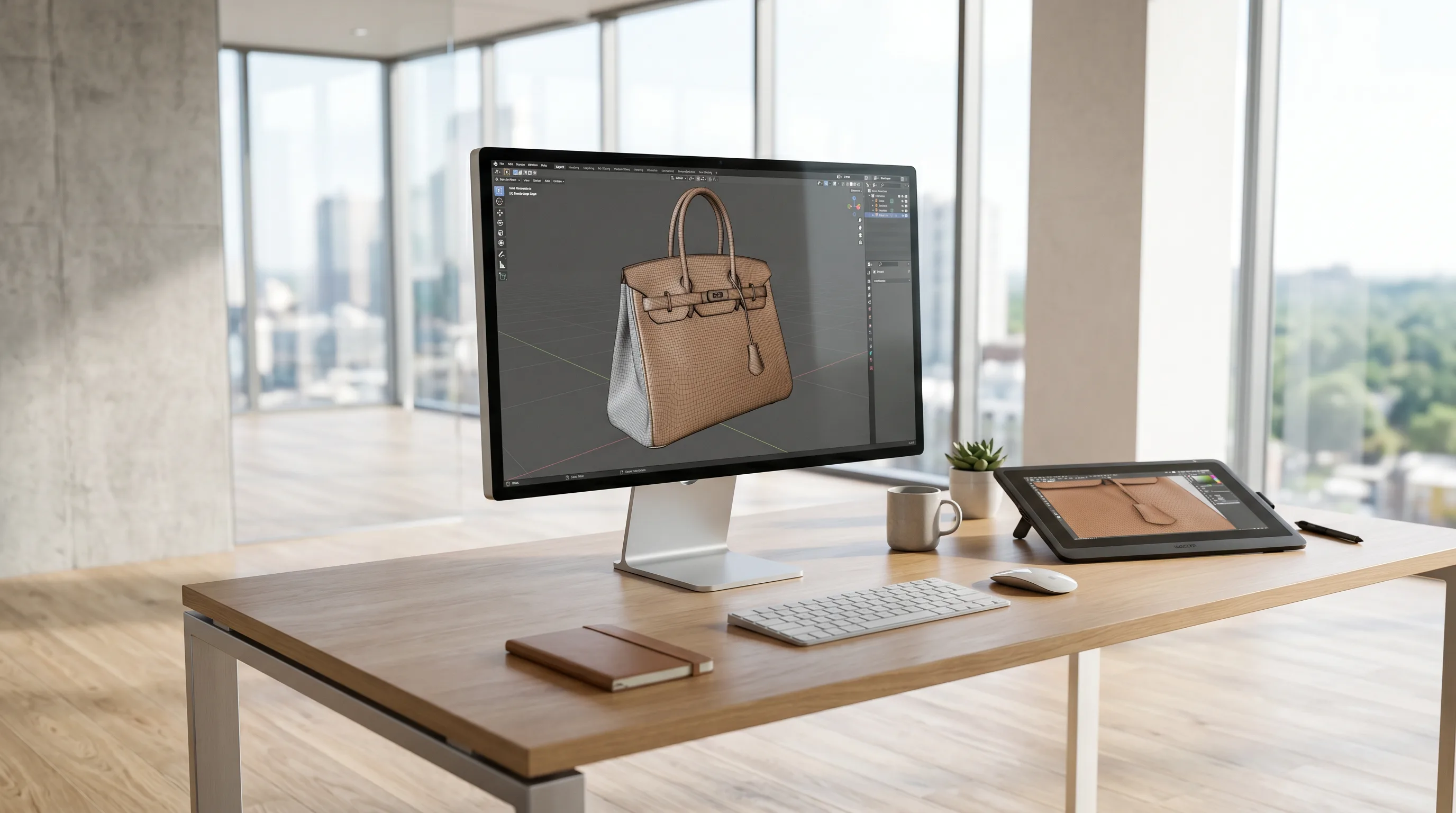
Augmented reality try-on technology has evolved from a novelty into a measurable revenue driver for e-commerce by 2026. AR try-on enables shoppers to visualize products on their bodies or in their spaces before purchasing, directly addressing the two most costly e-commerce challenges: purchase hesitation and product returns, which drain U.S. retailers of over $400 billion annually. According to Shopify data, products with 3D or AR content convert 94% higher than those without. A 2025 Snap and Publicis study of 4,028 shoppers found that 80% felt more confident making purchases while 66% were less likely to return items after using AR features. Specific brand results demonstrate significant impact: Rebecca Minkoff reported 65% higher order placement rates post-AR interaction, while Gunner Kennels achieved 40% conversion increases. On Snapchat, AR shopping lens users are 2.4 times more likely to purchase and generate 6.4 times higher purchase intent than traditional video. Retailers can implement AR through three pathways—WebAR in browsers, native app AR, and headset experiences—each balancing user friction against visual fidelity to resolve the fundamental question preventing purchases: how will this product actually look or fit?
Share on

Digital Twins: Accelerating R&D, Manufacturing & Supply Chain
www.merckgroup.com
Aug. 8, 2026, 7:07 a.m.
Digital twins are dynamic virtual replicas of physical objects, systems, or processes that enable simulation, prediction, and optimization of real-world counterparts. Pioneered by NASA in 1970 for the Apollo 13 mission, this technology leverages the Internet of Things, sensors, cloud computing, machine learning, and artificial intelligence to create real-time digital representations that continuously evolve alongside their physical twins. Unlike traditional computer models, digital twins facilitate seamless two-way interaction, allowing organizations to test products before manufacturing and remotely optimize operations. According to Professor Michelangelo Canzoneri, Head of the Global SMARTfacturing program, digital twins enable real-time monitoring, predictive maintenance, and deeper insights into performance while anticipating potential issues. The technology demonstrates substantial potential across healthcare, electronics, and life sciences, with research indicating a 25 percent potential reduction in clinical trials through digital twin implementation. The market reflects this growing importance, with projections estimating expansion to $155.84 billion by 2030. Organizations are increasingly exploring digital twins in smart manufacturing and intelligent workplaces to enhance decision-making and operational efficiency across entire supply chains.
Share on
PAV: Personalized Head Avatar from Unstructured Video
www.ecva.net
Aug. 1, 2026, 7:10 a.m.
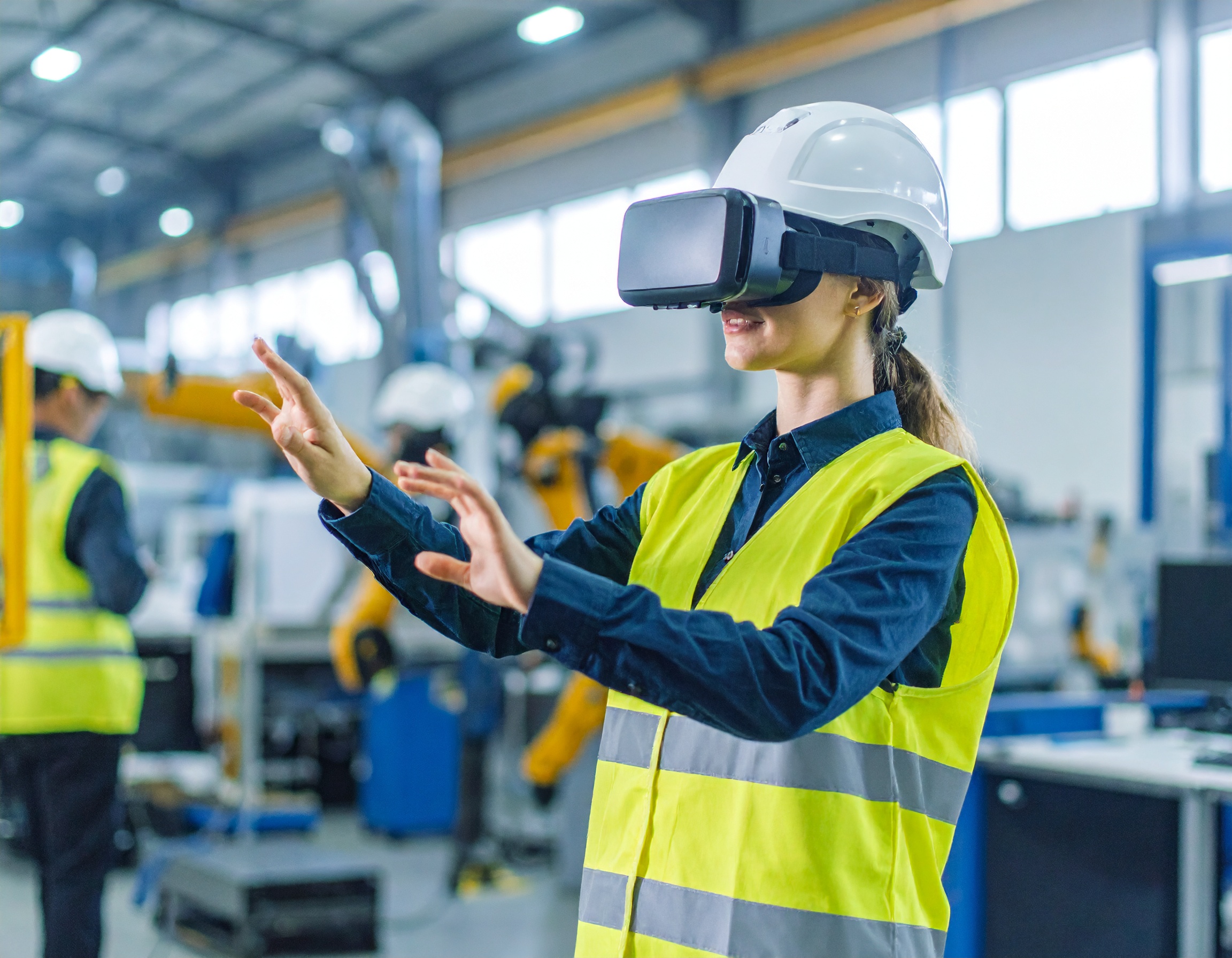
Researchers have developed PAV, a novel system for generating personalized head avatars from unstructured video footage. This technique addresses the growing demand for realistic digital representations of individuals in virtual environments, entertainment, and communication applications. The PAV methodology leverages advanced computer vision and machine learning algorithms to extract facial geometry, appearance, and expression data directly from casual video input, eliminating the need for specialized capture equipment or controlled studio conditions. The system constructs high-fidelity 3D head models that accurately preserve individual facial characteristics and can be animated in real-time. Key findings demonstrate that PAV produces avatars of comparable quality to traditional methods requiring expensive motion capture systems, while operating from readily available video sources. This innovation significantly reduces production barriers and costs associated with avatar creation. The work matters because it democratizes personalized avatar generation for broader applications including virtual conferencing, gaming, social media, and digital content creation, making sophisticated digital representation accessible to mainstream users and industries without specialized infrastructure or expertise.
Share on